
Adobe Firefly, Midjourney, Dall-E, ChatGPT and others allow you to create artificial images using prompts.
Many of these image generators have ethical and copyright guidelines. For instance, if you ask ChatGPT to create an “Image of internal combustion engine, transparent, with babies instead of pistons,” it will respond: I’m sorry — I can’t create an image that depicts babies in a harmful or dangerous situation (such as inside machinery).
It may suggest that a safer alternative image might be A transparent cartoon engine with cute plush toys as pistons. And voila:
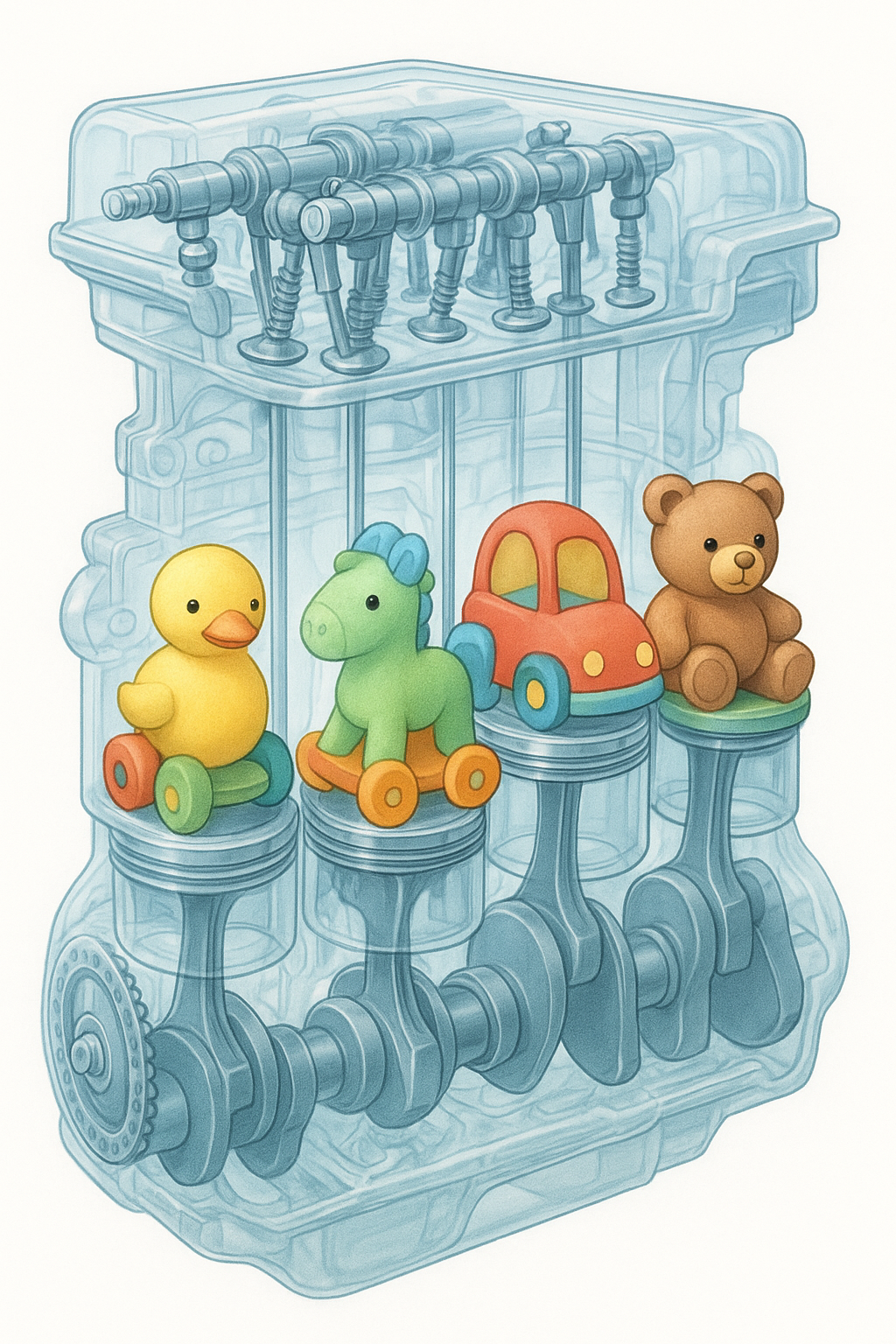
Generated by ChatGPT Dec 4, 2025
So what are the ethical issues that. guide image production?
ChatGPT said:
ChatGPT follows a set of ethical and safety rules designed to keep interactions safe, respectful, and lawful, while still being useful and creative.
Here’s an overview of the major principles:
1. Protecting People From Harm
ChatGPT avoids generating content that could lead to real-world harm, including:
-
Instructions for dangerous or illegal activities
-
Self-harm or violence encouragement
-
Realistic depictions of children in unsafe or exploitative situations
-
Guidance that could seriously injure someone (medical, legal, financial advice that crosses into professional practice)
2. Respect for Children’s Safety
This is one of the strictest areas:
-
No sexual content involving minors
-
No harmful or unsafe situations involving real children
-
Images showing children in dangerous machinery or scenarios are not allowed, even fictionalized
-
But non-harmful child-related content (toys, plushies, cartoon characters, dolls) is okay
This is why your earlier “babies as pistons” request couldn’t be generated.
3. Avoiding Sensitive Personal Data
ChatGPT avoids:
-
Revealing personal data about real people
-
Identifying individuals in images
-
Helping with hacking, doxxing, or privacy violations
-
Storing sensitive personal attributes unless you explicitly ask it to
4. Avoiding Hate, Harassment, and Abuse
ChatGPT avoids creating:
-
Hateful or abusive content toward protected groups or individuals
-
Content that promotes harassment or extremist ideology
5. No Misinformation on High-Stakes Topics
For areas like:
-
Elections and politics
-
Medicine
-
Law
-
Public safety
ChatGPT tries to give careful, accurate information, cite sources when appropriate, and avoid speculation.
6. Honesty About Limitations
ChatGPT is designed to:
-
State when it doesn’t know something
-
Identify hallucinations or uncertain information
-
Clarify when content is a guess or fictional
7. Creative Flexibility Within Safe Boundaries
-
It can generate fiction, art, humor, satire, fantasy, and imaginative scenarios
-
But it avoids crossing into harm, exploitation, or realistic illegal guidance
-
For images: avoids dangerous depictions of people, but harmless fantasy or toys is fine
If you’d like, I can explain:
-
Why a specific request is restricted
-
How to rephrase a request to stay within safe guidelines
-
More details about how the rules are implemented