
Electronic media, beginning with the telegraph, created an enormous shift in communication and, with that shift, a change in personal and social environments. Marshall McLuhan had a few insights into this, with his idea that the “medium is the message.” One early example of this is the impact of the telegraph on news writing, as seen in this short comparison: News Before and After the Telegraph. And, at the end of the line, the last pay phone is removed from New York City in May, 2022 (adjacent video).
The Origin of Wire Services
from Chapter 7 of Revolutions in Communication
While the telegraph and telephone are usually considered one-to-one communications devices, both also had an important place in the mass media. The telegraph linked the world’s newspapers in the 19th and 20th centuries through “wire services” such as the Associated Press in the US, Reuters in Britain, Havas in France and Wolff’s in Germany. The telephone system carried radio signals from New York to the rest of the nation in the early decades of the radio age; it was indispensable in establishing a centralized broadcasting system in the US and Europe. In both cases, many people who wanted a more decentralized, responsive and democratic information system were disappointed with the monopolistic way the networks developed.
In the US, the telegraph became a monopoly when Western Union absorbed all of the 500 companies that were established between 1844 and the 1860s. The Western Union – Associated Press monopoly was such a thorn in the side of American reformers in the late 19th century that they financed research into Alexander Graham Bell’s telephone — an important example of a technological circumvention around a communication bottleneck…
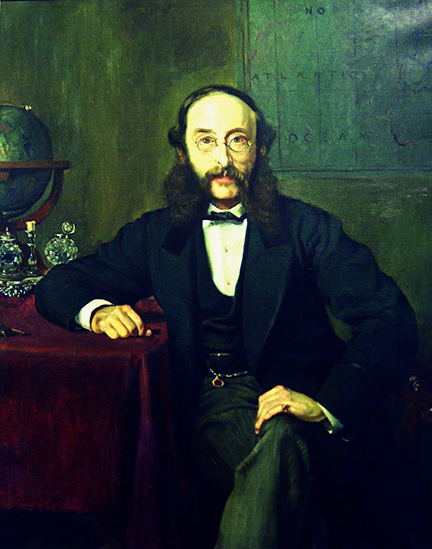
Julius Paul Reuter
In Europe, Charles Louis Havas, Paul Reuter, and Bernhard Wolff changed the world by creating news agencies that used the telegraph to rapidly transmit information.
Charles-Louis Havas (1783–1858) started his working life as a supply officer for the French military, serving in Nantes, France. Later he was a banker, a cotton importer, and a newspaper entrepreneur. Because of his work in both imports and news, he found it easy to view information as an international commodity. In 1830, following the July Revolution, Louis-Philippe succeeded to the French throne. Having strong liberal tendencies, Louise-Philippe proclaimed freedom of the press, and Havas saw the need for better organization of information and news traffic (Havas 2015). His first step was to set up a foreign newspaper translation bureau in Paris. The bureau was also a bookstore and a focal point of international politics and information. Three years later it became Agence Havas, the world’s first news agency (Shrivastava 2007).
In the beginning, Havas used carrier pigeons to bring news from the morning’s British newspapers to Paris by 3.00 p.m., in time for the evening editions. When the telegraph arrived in France in 1845, Havas was the first to use it. The Havas agency became a publicly traded company after the death of Charles-Louis Havas in 1858, and was the largest of the world’s news agencies for almost a century.
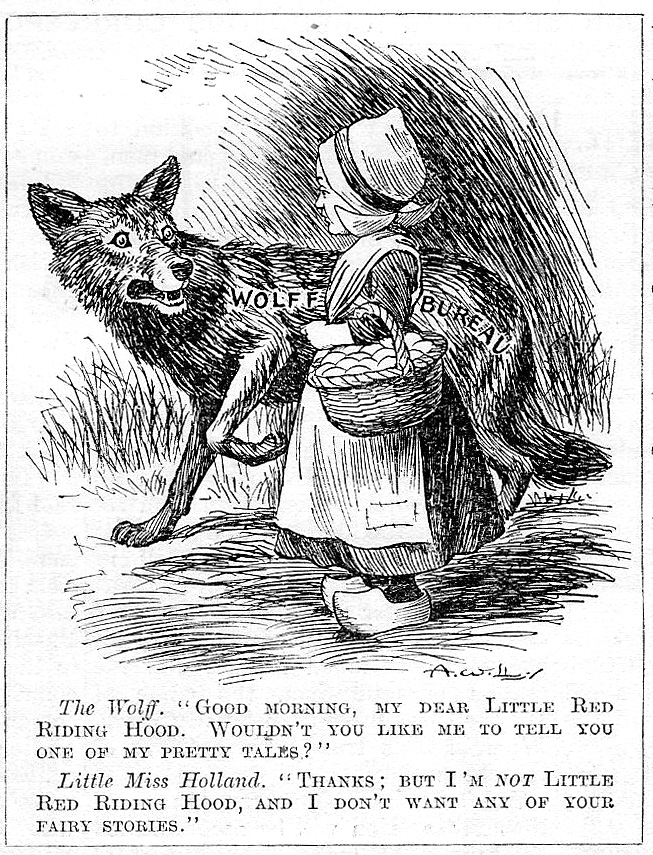
1914 British political cartoon depicting the big, bad “Wolff” telegraph service leading the Dutch astray.
Bernhard Wolff and Paul Reuter were two Havas employees who, with the help of Havas, founded two other major telegraphic news agencies. Wolffs Telegraphisches Bureau started in Berlin a year after the Revolution of 1848 and the liberalization of press laws. Wolff was manager of the National Zeitung, founded that year, which started a policy of carrying news dispatches by telegraph from Paris, London, Amsterdam, and Frankfurt. By 1869, WTB was so closely associated with the government that it had offices in the main postal and telegraph building.
Paul Reuter was a journalist and bookstore owner who married a British banker’s daughter. He and his wife left Germany after the collapse of the revolution of 1848 and he began working for Havas in Paris as a translator. Seeing opportunity in the expanding telegraph, Reuter moved to Aachen, Germany, in October of 1849 and opened a news and stock service. Aachen, that year, was the end of the line for the telegraph from Berlin. When the French opened a telegraph line from Paris to Brussels, Reuter was in the middle.
He began filling in the 140-kilometer (90 mile) gap across the border by using carrier pigeons and express riders. As the telegraph network expanded, Reuter stayed ahead. He moved to London and opened an office in the heart of the city’s financial center one month before the new London–Paris submarine telegraph cable started operating.
Havas was also influential in the creation of other news agencies. Guglielmo Stefani (1819–61) was a journalist from Venice who joined the 1848 revolution and fought for Italian independence from Austria. He was imprisoned by the Austrians but then exiled, and in 1853, with help from Havas, he set up Agenzia Telegrafica Stefani. After his death, Havas acquired half of the agency, which continued as the major Italian news agency until 1945.
Discussion questions
- The invention: How did Samuel Morse hope that the telegraph would be developed? What other inventor influenced that idea? (Hint: it involved photography). How did the business of telegraphy diverge in the US and in Europe later in the 19th century?
- The code: How did printing influence the development of Morse code? How did Morse Code influence other technologies?
- The medium and the message:How would Marshall McLuhan have seen the differences in writing styles between Russell and Villard? Is the medium really the message?
- The monopoly: How did political opponents of the Associated Press – Western Union monopoly see the problem? What did they think government should do? What was the role of the telephone in this?
People & events
Claude Chappe, Samuel Morse, Charles Wheatstone, Gardiner Hubbard, Alexander Graham Bell, E.W. Scripps, Charles Louis Havas, Paul Reuter, Bernard Wolff,
Western Union, Associated Press, United Press, International News Service, Havas, Wolff’s, Reuters, AT&T, Bell Labs,
public domain Books: telegraph and telephone
- Lincoln and the Telegraph, 1907 book by one of Lincoln’s telegraphers.
- When the Medium Was the Mission: The Atlantic Telegraph and the Religious Origins of Network Culture, by Jenna Supp-Montgomerie
- J. Munro, Heroes of the Telegraph, 1891 – available in text form at Gutenberg or in pdf form from Google Books. Detailed story of heroic invention in a somewhat arcane style.
- History theory and practice of the electronic telegraph, by George Prescott, The Associated Press, 1866.
- Samuel Morse, Letters and Journals, Project Gutenberg, and Samuel Morse papers by the Cybertelecomm project.
- Henry M. Field, History of the Atlantic Telegraph
- Frank Lewis Dyer, Edison, His Life and Inventions, (Google books) and (Podcast). Chapter 4 describes young Edison’s life as a telegrapher and some of the day to day work for the news media of the time. Chapters 5 – 10 describe telegraph, telephone and voice recording inventions, while chapter 21 describes motion picture inventions.
- John E. Kingsbury, The Telephone and Telephone Exchanges, 1915 (It was Nathan Kingsbury, president of AT&T, who worked out the “natural monopoly” deal with the U.S. Justice Dept. in 1913 called the “Kingsbury Commitment.”)
- Cyclopedia of Telephone and Telegraph, 1919.
- Email in the 19th century (about the origins and extent of the optical telegraph).
- Danger Signals, a memoir about telegraphy and train safety, by John A. Hill and Jasper Brady, 1898.
- The Fading Glory of the Television and Telephone – Pew Research Center
- The cables that link the world — Wall Street Journal, May 27, 2012.
- 10 gadgets forseen by science fiction writer Ray Bradbury, Washington Post, June 11, 2012
- The Trans-Atlantic telegraph, Nigel Linge, University of Salford. Part of the university’s History of Telecommunications project.
- Treasure trove of US Civil War telegrams being decoded at the Huntington Library. LA Times, Aug. 24, 2016.
Films about the Telegraph and telephone
- A dispatch from Reuters, 1941 melodrama that portrays Reuters as a secret courier service.
- The Great Transatlantic Cable, 2005 American Experience documentary. Some portions available as YouTube video.
- “Long Distance” industry documentary by Western Electric telephone company, 1941.
Section Overview – Chapters 7, 8 and 9
The significance of the electronic revolution
Rapid communication over long distances has often been associated with divine forces, for example, in Greek and Roman mythology, with Nike, Hermes and Mercury carrying messages for the gods.
For ordinary mortals, however, communication has historically been very difficult, as it was confined to the speed of a running horse or fast ship. History and literature are full of references to the role of messengers bringing the long-delayed news of victory or defeat. The runner from Marathon, the messenger in Shakespeare’s Henry IV, the signal flags of Trafalgar are among many examples of the place communications held in pre-industrial history and culture.
The classic example of news failing to arrive in time involves the needless loss of life at the Battle of New Orleans. When the United States and Britain fought the battle on January 8, 1815, the armies in the field could not have known that a peace treaty had been signed before Christmas of 1814. It took seven weeks for the fastest sailboat to carry the message from London to Louisiana.
Yet in about 50 years, the same message might have taken less than an hour to be relayed by electronic telegraph using Morse code. The unique combination of hardware (electric wires) and software (a simple arrangement of dots and dashes) changed the world, brought down the barriers of time and distance, and opened the door to the electronic and digital mass media revolutions. No other development since printing had so many impacts in so many different walks of life.
The telegraph and telephone as mass media
Historians usually see one-to-one personal media (telegrams, telephones,) as entirely separate from mass media (newspapers, radio, TV) until the late twentieth century, when the two basic types of media were brought together by digital networks (giving us cell phone video, for instance).
Yet media can’t be so easily separated. For instance, even though letters sent through the post office are one-to-one communications, the US Postal Service served as the infrastructure for printed mass media. The service carried newspapers and magazines at very low postal rates that were specifically meant to subsidize the US publishing industry. In contrast, higher postal rates in Europe held back the development of printed media, as we saw in Chapter 2.
Similarly, the telegraph carried private, one-to-one communications in the form of telegrams, but it also carried political and economic news across the world through the mass media. Between the 1850s and the 1980s, the telegraph was the essential infrastructure of a two-stage mass communications system. News generated in one location flowed up the chain and was then distributed to local newspapers by wire services like Reuters, Havas and The Associated Press.
The telephone system, used mostly for private one-to-one communications, also served as the infrastructure of the national radio networks when they emerged in the 1920s. News, drama, comedy and other programs originating in one place would usually be carried to the rest of the country by static-free telephone lines and then broadcast by regional radio stations. Like the telegraph, the telephone was indispensable to the two-stage mass communications system until satellites arrived in the 1980s.
The business models for the telegraph and telephone also had an impact on the overall shape and diversity of the mass media. In the United States, a joint Western Union–Associated Press monopoly shaped the economics of publishing, creating barriers to entry and making it difficult for newspapers to compete. The very device that expanded the spatial and temporal reach of communication seemed to weaken its depth and flexibility. Younger journalists complained that the newspapers spoke in the voice of an older generation, as we have seen in Chapter 3.
Meanwhile in Europe, the competitive economics of publishing took different forms since government owned telegraph and telephone systems did not favor any one particular group of members, and this contributed to a greater diversity of expression.
While the electronic revolution began with the telegraph and telephone, neither of these prototype electronic technologies can be historically isolated from radio, television and satellite broadcasting. Their scientific origins and business models were intertwined. Industrial print and early radio and television grew up in an interdependent network, around the telegraph and telephone, from the beginning. To a large degree, the concept of media “convergence” is not just an artifact of the computer age, but rather, a constant condition in mass media history.
Cycles of open and closed technologies
Innovation in communication technology often follows a cycle that can be described in three stages: open, closed and alternative. The first stage of the cycle involves open experimentation, competition and development of a new media. It may be followed by a second stage in which stakeholders close the technologies around profitgenerating activities protected by patents. If the stakeholders are successful, they may be able to dominate the market. In a third stage, successful monopolies become stagnant, charging more and more money for fewer and fewer services. The downward spiral often encourages the search for technological alternatives to circumvent the old monopoly. Once a promising new avenue is found, the open competition starts again.
Although the cycle of open-closed-alternative technologies is a useful generalization, it doesn’t fit every media technology exactly. As we’ve seen in Section II, photography was born as an open source technology, with its exact secrets revealed from the outset. In contrast, the earliest cinema companies attempted to control the industry through patents and industry associations. Although direct industry control failed, indirect content control through the Motion Picture Production Code become the norm.
As we will see in Chapter 7, telegraphy also went through a period of open experimentation, and Samuel Morse, at least, wanted it to stay that way. Like Daguerre, he also hoped that the government would own the hardware. But in the US, as over 500 telegraph companies emerged, fought, and then merged by 1866, telegraphy became a national monopoly under the Western Union company. Operating without regulation, Western Union and its sole partner in the Associated Press exerted an enormous amount of control over which ideas and people would compete in the information system of the nineteenth century.
One response was a US campaign for legislation to transfer the telegraph to the Post Office, which was already taking place in Britain. When that failed, the same campaigners who fought the telegraphic monopoly helped create the telephone system in the 1870s. Through its control of patents and market manipulation, the Bell telephone system also became a monopoly around the turn of the twentieth century.
Anxious to avoid problems that had surfaced with Western Union, the US Justice Department forced AT&T to take a neutral “common carrier” position with respect to content and charges for services. As we will see in Chapters 8 and 9, broadcasting also began with a cycle of open innovation among scientists like Heinrich Hertz and James Clerk Maxwell.
Entrepreneur Guglielmo Marconi attempted to control the emerging radio telegraph system, and was initially successful, but the US and UK governments curbed the monopolies in the pre-World War I period. American Marconi eventually became the Radio Corporation of America, which in turn created the National Broadcasting Company. Meanwhile, inventors like Lee Deforest and Reginald Fessenden turned to radio telephony, and some of their key patents were purchased by AT&T. By the 1920s, radio technology had more or less closed, and television technology was opening. By the 1950s, television technology was closed, and the search for circumventing technologies would lead to satellite and cable systems by the 1980s.
Social responsibility
With the power of amplified sound and moving images, radio and television created new opportunities to both abuse people and to elevate the human condition, and history provides examples of both. The tragedies of the Holocaust, the Rwandan and Bosnian genocides, and countless others, would not have been possible without a mass media to incite hatred.
Like the printing press, however, the new electronic media also provided many opportunities for expanding tolerance, diversity and freedom. Radio rallied the public and was a key ingredient in elevating nationalistic sentiment in the 1930s and 40s. Televised news also helped crystallize public opinion around civil rights issues in the 1950s and the Vietnam war in the 1960s.
To a society accustomed to a slower pace of life, it seemed, suddenly, as if the world were laid out at the viewer’s feet, that every activity could be known, that every culture could be understood. But the distortions of the mass media proved difficult to counteract, as the imbalance in media power from developed to developing nations in the 1970s created what was termed “Hollywood hegemony.” The apparent threat of Western modernity to traditional cultures created a violent reactions at the end of the twentieth century and the beginning of the twenty-first.
Today, with instant, global, full spectrum communication possible through dozens of media, we are indeed a global village, but we are not a peaceful one. We are not yet reconciled to each other’s differences, aware of each others strengths, or tolerant of each other’s weaknesses.
As Henry David Thoreau once observed, communication technology can be nothing more than an improved means to an unimproved end. And yet, many people had a larger and more positive vision for the role of mass media technology—a role that has yet to be fully cast for a vision that is still being articulated.
Telegraph
-
- Video: Telephone and Telegraph – Burton Holmes vocational
- Telegram for America – Promotional film for Western Union Telegraph Company, featuring its history, current practice, and emerging technology.
- Cipher codes role in cable monopoly Dec 6, 1908 – Rates exorbitant p 8
- Too much competition these days?
- Telegraph
- Trans Atlantic
- Telegraph monopoly:
Samuel FB Morse as an individual had antebellum ideas about slavery and yet what might be called progressive views about the structure of the telegraph industry. But of course, serious history attempts to avoid the whig dilemma and see things as they were seen at the time.
Have you read much about the history of telegraphy? This might be sort of challenging to a conservative perspective.
First, the history of electromagnetic telegraphy is closely linked to the history of photography. Samuel FB Morse was present in the audience when Louis Daguerre and the French government literally gave away the process in August 1839. Morse brought photo technology back from France to New York and started teaching it at NYU a month later. Morse wanted government ownership of the telegraph in much the same spirit, and petitioned the government to pay for a demonstration project between Baltimore and Washington. The demonstration was funded in 1844, possibly by accident, raising Morse’s hopes that the telegraph would be owned by the government in the US, as proved to be the case in the rest of the world (except the UK). The postal, telegraph and telephone offices (PTTs) of Europe had lower rates than the US company that came to dominate these latter two functions — AT&T.
Secondly, the history of the telegraph is that of the first large scale corporate monopoly (Western Union) allied to a monopolistic media service (the Associated Press). At the time that the Sherman Antitrust Act was forcing the breakup of Standard Oil, Western Union (by then AT&T) argued that it was a “natural monopoly” and the Justice Department agreed in what was called the Kingsbury Commitment.
Thus, the structure of American telecommunications as a regulated monopoly, separate from the government, was set until the 1945 US v Associated Press case and then the 1982 breakup of AT&T.
Telephone
- Video: The telephone
- Video: How to use the dial phone AT&T 1927 (silent)
- Video: Network broadcasting AT&T phone lines Contents. How telephone transmission lines are used to convey network programs to radio stations located in various sections of the country. 1934 no sound
- Video Before your telephone rings 1948


 Media law and ethics

 Early Dageurotypes

 Ida B Wells
 Dorothea Lange
 William Yukon Chang’s
 Margaret Bourke-White
  Tank Man
  Harold Edgerton
 Evelyn Berezin,
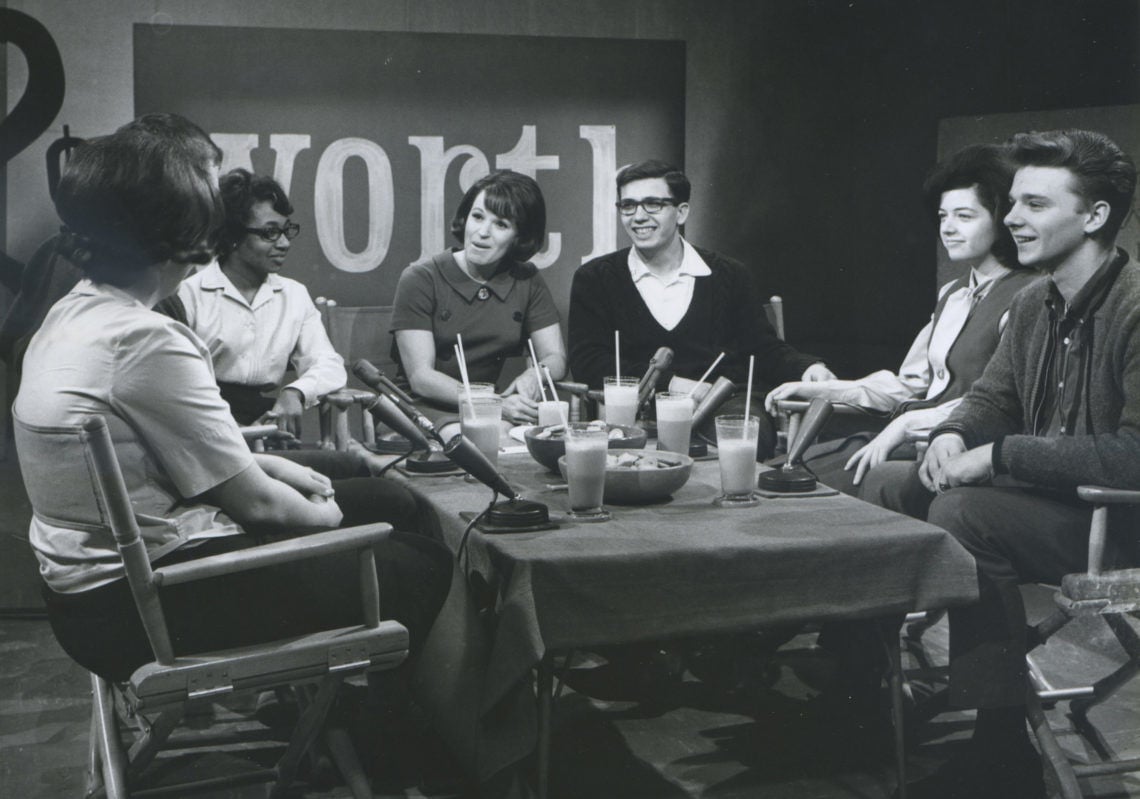 PBS archives
 Virtual Reality
 /https://public-media.smithsonianmag.com/filer/b4/ec/b4ec2608-cfe6-4187-a1de-7dbe856c1e11/lowell_thomas_magic_dials_1.jpg) Lowell Thomas
Lowell Thomas
 Clare Hollingworth
 Ring Lardner
  TV and US Civil Rights
 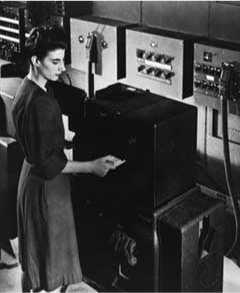 Unrecognized women of ENIAC
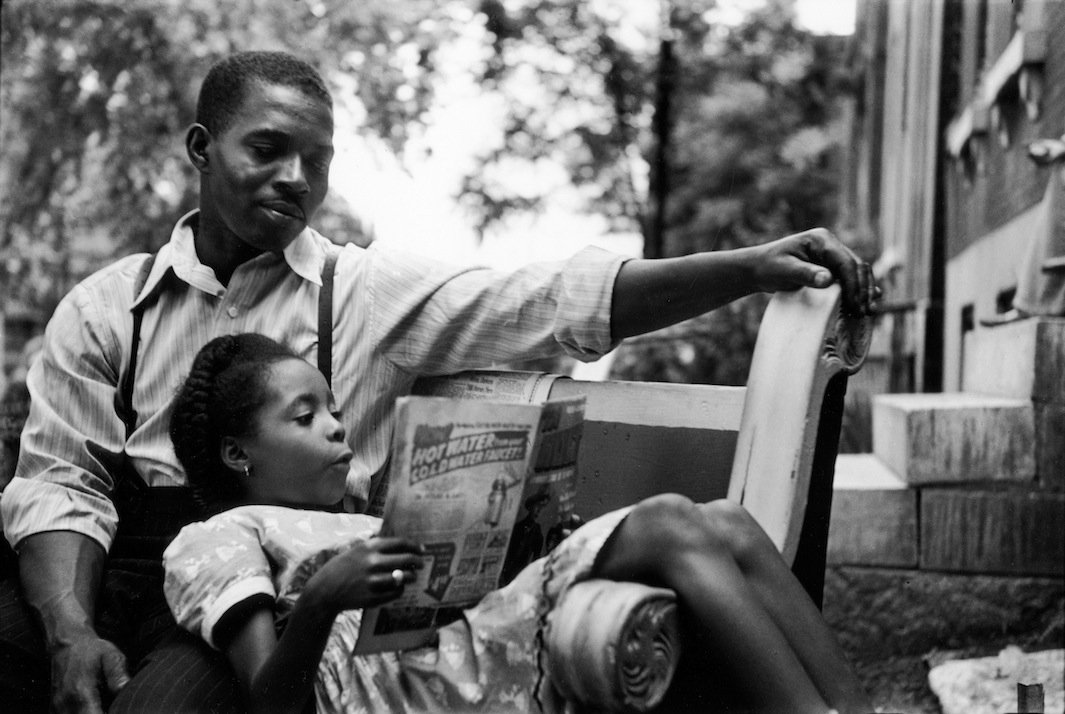 Lost Gordon Parks photos
 Birth of a Nation turns 100
 The Wipers Times,
  Ixnay on the Otography-fay
 Nixon-Kennedy debates
  Dorothea Lange
 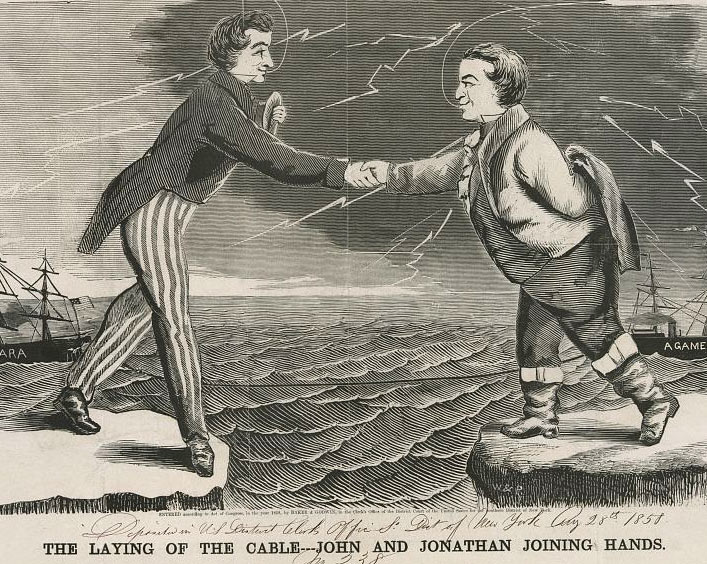 Too Fast for the Truth?

 Dr. Zhivago
 Margaret Fuller

 Early Orson Wells film
 Cartoons that changed the world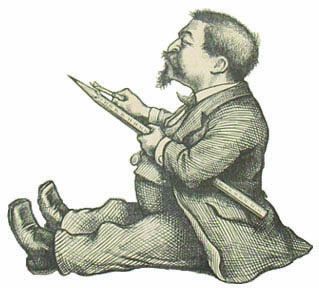
 James Gordon Bennett Jr.