
 The 1958 Pulitizer Prize for photography went to William C. Beall a combat photographer during World War II who was working for the Washington Daily News. The photo was taken at a parade on September 10, 1957. According to the Pulitzer citation: “While keeping his eye on the parade, Beall saw a small boy step into the street, attracted by a dancing Chinese lion. A tall young policeman stepped in front of the boy, cautioning him to step back from the busy street.” Above, Beale holds the photo.
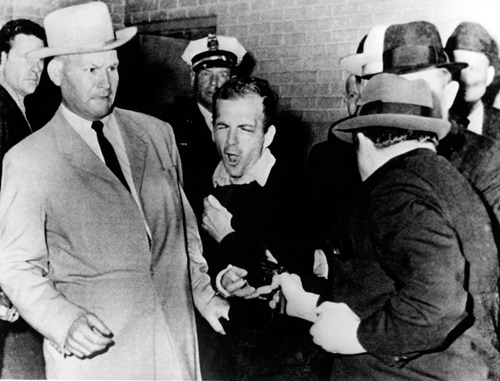 Robert Jackson won the 1964 Pulitzer Prize for this photo of Jack Ruby killing Lee Harvey Oswald, apparent assassin of US President John F. Kennedy. Jackson was at Dallas police headquarters for the transfer of suspect Lee Harvey Oswald to the county jail on November 24, 1963, two days after the assassination. Many of the events around the Kennedy assassination remain mysterious, including Ruby’s motivation for killing Oswald.
But the news photos that kept winning Pulitzers in the 1960s and 70s showed the horror and devastation of the war in Vietnam. There was, for instance, Horst Faas’ 1964 photo of a Vietnamese farmer holding the body of his son and saying to troops in a passing vehicle, Look what you have done.

Horst Faas, AP, 1964, Vietnam.
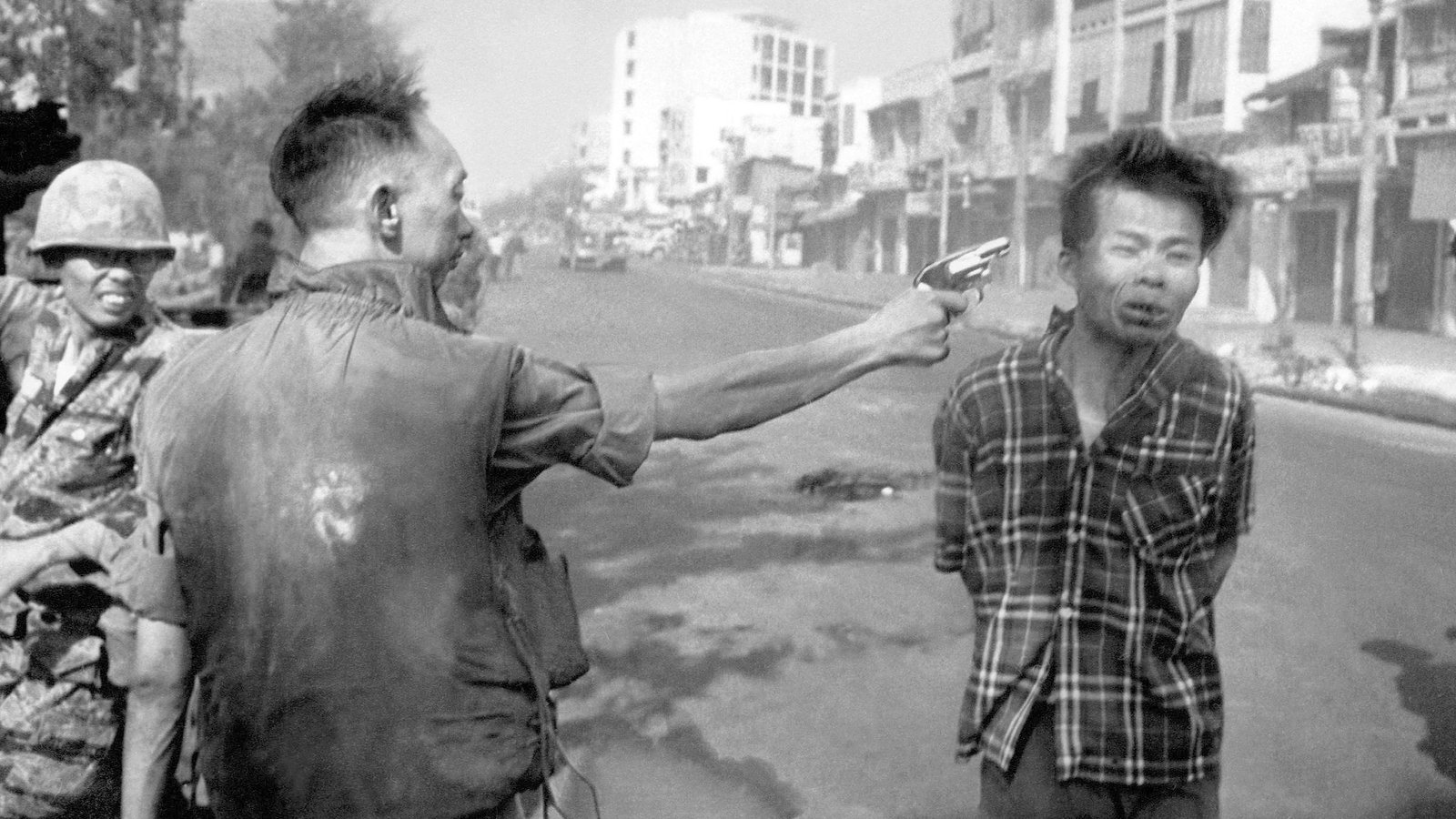
Saigon execution, 1968, by Eddie Adams
Most famous was the 1968 Associated Press photo of an execution on the streets of Saigon. Eddie Adams was haunted by the photo and ended up regretting that he had taken it. “”I was getting money for showing one man killing another,” he said later. “Two people died in that photograph. The general killed the Viet Cong; I killed the general with my camera.”
Yet another war photo was Nick Ut’s 1972 picture of the aftermath of an air attack. Entitled “The Terror of War,” It is one of the most famous images of the Vietnam war.

June, 1972, Trang Bang, Vietnam, mistaken napalm attack on friendly village, AP Photo by Nick Ut.