Category Archives: Politics & media law

First Amendment Updates, 2025-26

FCC’s  Brendan  Carr

PBS defunding reversed — March 31 — A federal judge has permanently blocked the Trump  administration’s  federal funding cuts for National Public Radio and the Public Broadcasting Service.

Pentagon press policy unconstitutional — March 20, 2026 — A federal judge struck down the    Pentagon’s prior restraint press policy from September 2025,  saying that it violated the First and Fifth Amendments to the Constitution.

More ThreatsMarch 14-15 2026  President Trump and FCC chair Brendan Carr threaten to revoke broadcast licenses over what they claim to be  incorrect news items.  This followed a Trump social media post March 14  and March 15  claiming that damage reports from a minor incident were deliberately distorted. “Their terrible reporting is the exact opposite of the actual facts!” Trump wrote. “They are truly sick and demented people that have no idea the damage they cause the United States of America.”  (Note: First Amendment advocates have repeatedly warned that Trump’s “rage rhetoric” is dangerous. )  

Is it constitutional to threaten revocation of licenses?  In NRA v Vullo, a unanimous May 30, 2024 Supreme Court decision, Justice Sotomayor wrote for the court:

A government entity’s threat of invoking legal sanctions and other means of coercion against a third party  to achieve the suppression of disfavored speech violates the First Amendment… Government officials cannot attempt to coerce private parties in order to punish or suppress views that the government disfavors.  .

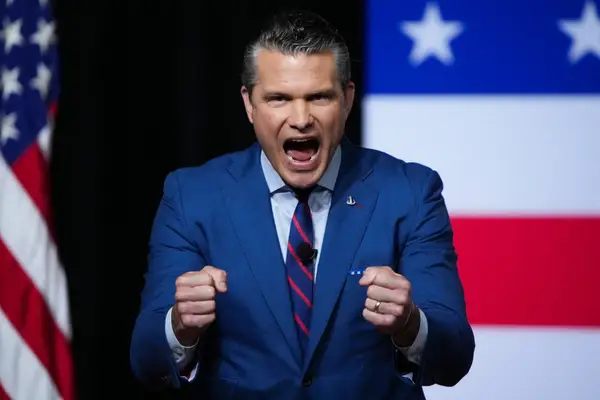
Pete Hegseth was not flattered. AFP / Pool photo.

Unflattering photos — March 10 — Defense secretary Pete Hegseth ordered photojournalists barred from Pentagon press conferences. Sources said Hegseth was upset over “unflattering” photos, although its difficult to understand which  might have flattered him in the first place.

Deaths of soldiers only reported to make Trump look bad — March 4 — During a press briefing on March 4, Pete Hegseth claimed that the press was only reporting on the deaths of American soldiers in order to “make the president look bad.”  Despite his time as a Fox news anchor, Hegseth clearly does not understand the role of the media.

Interview blockedFeb 17, 2026 An interview with Texas democratic candidate for senate James Talarico, was blocked from the CBS broadcast of the Late Show with Stephen Colbert under (supposedly) the Equal Time Rule.

Threats — Jan 17, 2026 — The White House threatens a lawsuit against CBS if it edits a  Trump interview.  White House press secretary Karoline Leavitt told a CBS producer that the network news program had to run a full interview with Donald Trump, without edits, or CBS would be sued.  “Not long ago, the notion of a White House press secretary’s casually threatening a lawsuit if a journalist does not obey her orders would be shocking,” the New York Times said in a news article about the threat. “But Mr. Trump has made abundantly clear that he is serious about pursuing legal or regulatory action against media outlets whose coverage displeases him.”

The litigation Trump threatens is nearly always frivolous, capricious, and lacking an any serious merit whatsoever. When not “settled” out of court by media organizations under Justice Department pressure for merger approvals, the suits are thrown out of court.  This is an entirely abnormal and unprecedented use of executive power to oppose the spirit and letter of the First Amendment.

Reporter’s home searched — Jan 13, 2026 — FBI agents executed a search warrant on Washington Post reporter Hannah Natanson, whose beat included a wave of firings and layoff of federal workers. The search may well be illegal under the Privacy Protection Act of 1980.  UPDATE: Feb. 24 — The judge who approved the search warrant chastised prosecutors who did not tell him about the Privacy Protection Act of 1980,  a federal law that limits ex-parte search warrants of newsrooms or reporters working files. Continue reading

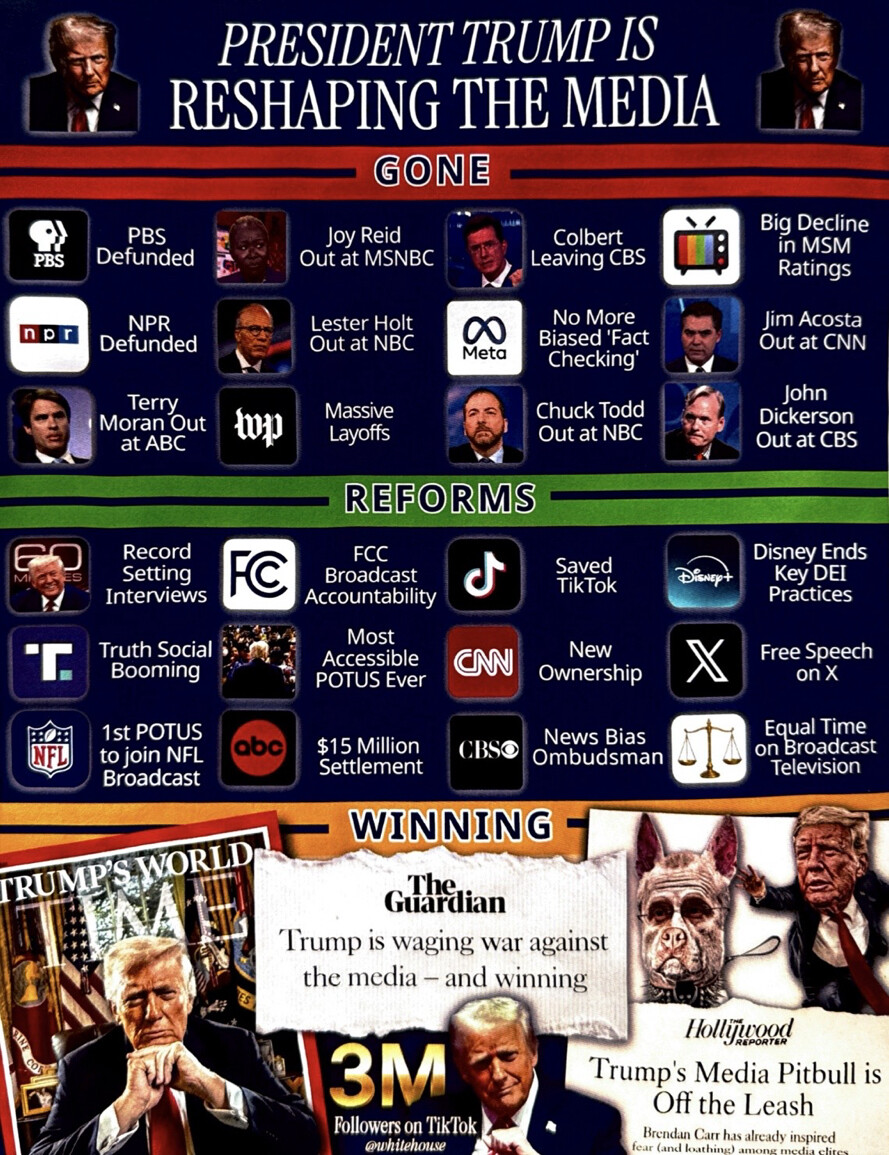
Trump brags he’s “reshaping the media”

This astonishing admission of government interference with the press was posted on Trump’s social media account. Trump is openly violating the First Amendment. See @realDonaldTrump March 14, 2026.

Do EU regs threaten American speech?

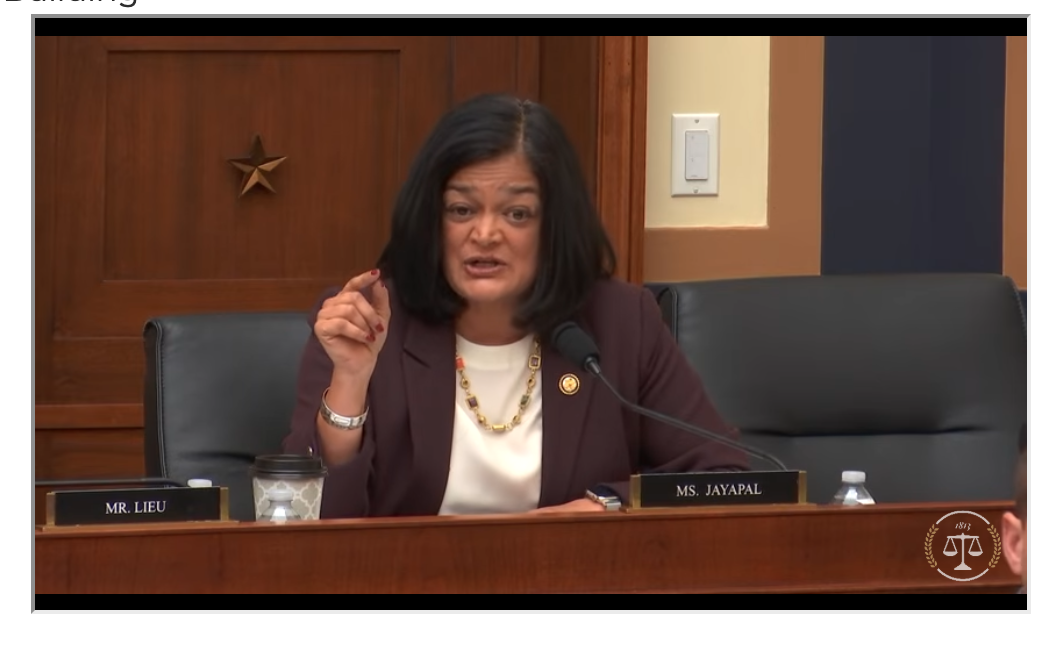
Rep. Pramila Jayapal (D-WA)

To oppose EU hate speech laws and other digital media regulations, the House Judiciary Committee brought in three minor European figures who testified in support of  legislation that would expand US First Amendment freedoms into Europe.

The  Feb. 4, 2026 hearing, “Europe’s Threat to American Speech and Innovation: Part II,” highlighted Europe’s supposed “online censorship laws,” such as the European Union’s (EU) Digital Services Act (DSA) and the United Kingdom’s (UK) Online Safety Act (OSA).

According to the Republican-led committee, these European laws “threaten Americans’ right to speak freely online in the United States.”

Of course, the vast majority of European officials don’s support the Republican viewpoint and have argued that opposing their regulations undercuts their national sovereignty.

Democrats in the sharply divided committee also disagreed, saying we can’t compare minor inconveniences in EU law to the harsh treatment of citizens and press in Minnesota.

“We should focus on our First Amendment violations right here at home instead of pulling in people from other countries,” said Rep. Pramila Jayapal (D-WA) “That’s what this committee should be investigating.”

Continue reading

New ideas for 2026

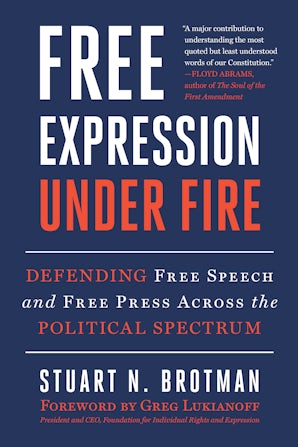
How can we rebuild a culture of free expression?

As America approaches its 250th anniversary, free speech and press freedom face unprecedented threats from campus censorship, social media content moderation, and government pressure campaigns. From college students afraid to voice opinions in class to journalists facing investigations, the First Amendment foundations of American democracy are under multiple threats in ways the Founders never imagined.

Stuart N. Brotman is Professor of Media Management and Law and Beaman Professor of Journalism and Electronic Media at the University of Tennessee, Knoxville.

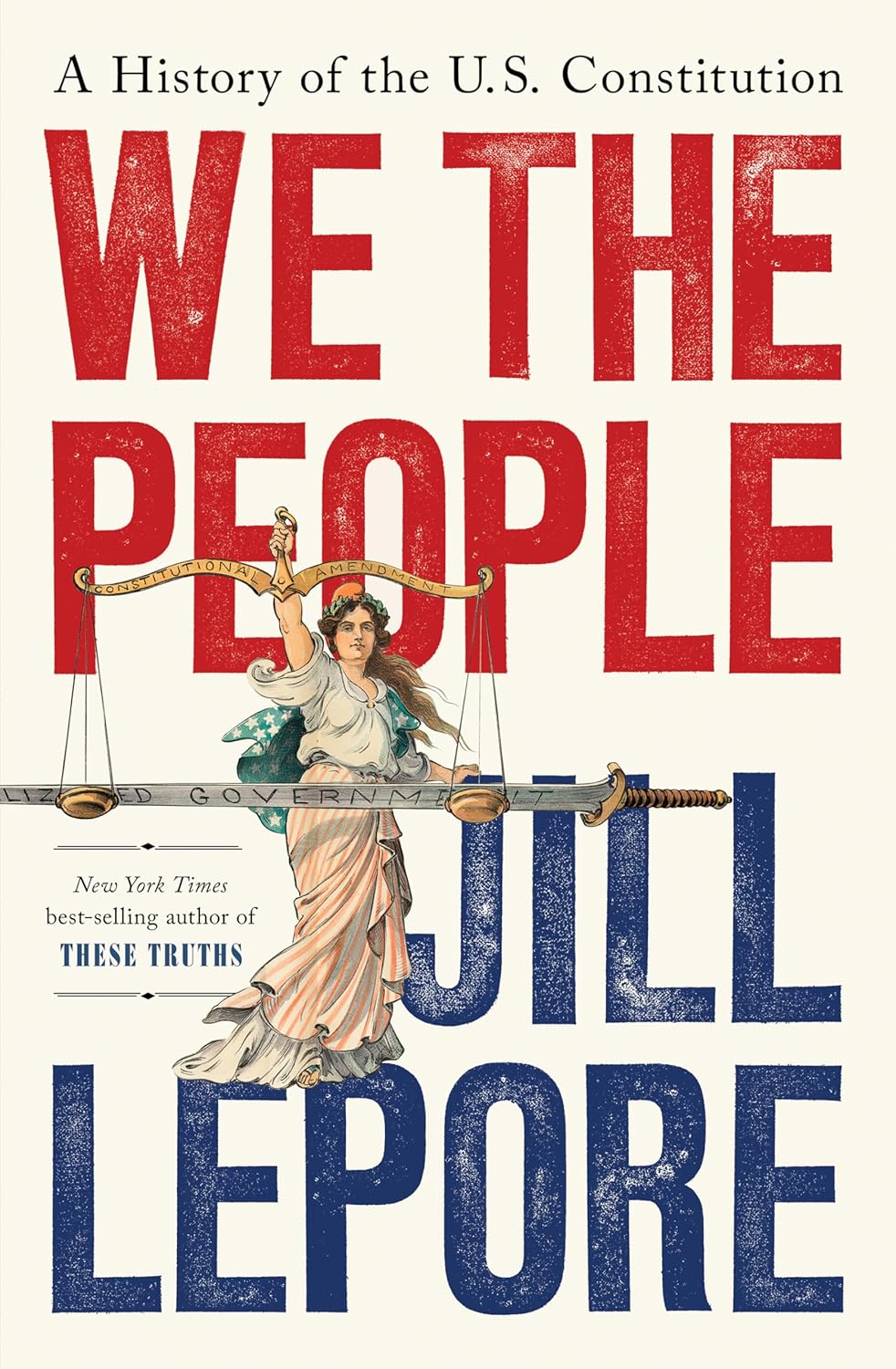
“It was intended to be amended”  A History of the U.S. Constitution by Jill Lepore is a 2025 book about the origins and theories of constitutional law. She argues that the framers intended it to be a living document, not a static one (as “originalists” believe). Also, amending the constitution should be easier in order to reduce the risk of political violence and judicial overreach.   

Jill Lepore is an historian and journalist. She is the David Woods Kemper ’41 Professor of American History at Harvard University and a staff writer at The New Yorker.

Perspectives on Trump media pressure

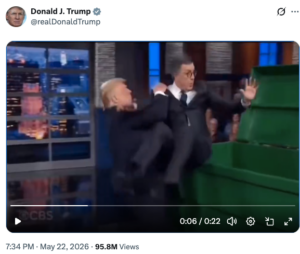
Put Colbert to sleep — Dec 24 — In a social media post, Donald Trump said that comedian Stephen Colbert is a “pathetic train wreck” and that CBS should “put him to sleep”  He also said: “If Network NEWSCASTS, and their Late Night Shows, are almost 100% Negative to President Donald J. Trump, MAGA, and the Republican Party, shouldn’t their very valuable Broadcast Licenses be terminated? I say, YES!”

Another comedian bothers Trump  — Nov 17 —  Trump and FCC chair Carr called for comedian Seth Meyers to be fired by the National Broadcasting Company. “NBC’s Seth Meyers is suffering from an incurable case of Trump Derangement Syndrome (TDS),” Trump posted on Truth Social on Nov. 15.

Demeaning reporters — Nov 14 — Asked about the ongoing Epstein scandal, Trump turned on a female reporter and responded “Quiet, Piggy.”

Suing BBC — Nov 14 – President Trump said he was considering a libel suit against the British Broadcasting Corp. for up to $5 billion after it spliced together separate excerpts of a speech on January 6, 2021, when his supporters stormed the Capitol. Trump claimed the edit created the impression he had called for violence. BBC apologized but said it would fight any legal action.

Not taking the Pentagon press pledge — Oct 14 — News organizations have refused the Trump administration’s offer to allow them continued credentials at the Pentagon in exchange for a written pledge to only report “authorized” official information approved by the Pentagon press office.  Organizations refusing this unprecedented new policy include the Associated Press, New York Times, CNN, Reuters, Fox and Newsmax.  In addition to refusing the policy,  NPR defense reporter Tom Bowman is turning in his press credentials.   OneAmerica News is the only outlet that has agreed to the new Pentagon rules. The Poynter Institute provides a breakdown on the policy and its critics. Update from the Reporter’s Committee for Freedom of the Press:  The New York Times filed a lawsuit  in the first week of December 2025 claiming that the new Pentagon policy violates the First Amendment. The RCFP has a short summary and explainer of the legal theories advanced by the Gray Lady.

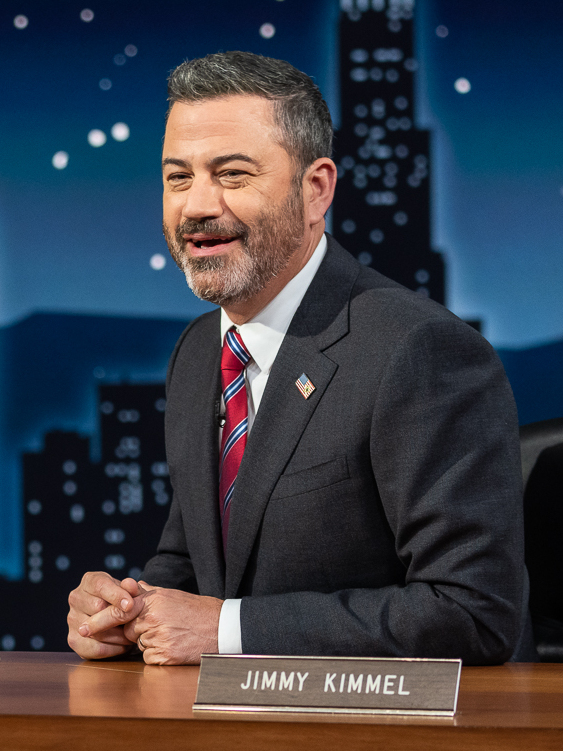
Kimmel show cancelled — Sept. 17 — Pressure from the Federal Communications Commission led ABC to cancel the Jimmy Kimmel show.  Kimmel faced criticism over remarks about the politics of the man who is accused of killing conservative activist Charlie Kirk.  ABC / Disney relented after fans objected, and Kimmel returned Sept. 23 with a moving  defense of free speech.

Trump calls for FCC to revoke broadcast network licenses — Aug 25, 2025 – President Donald Trump reiterated a long-running push for the Federal Communications Commission to revoke station licenses of two major U.S. broadcasters and charge them for using the public airwaves, as he criticized their news programming.  Trump suggested late on Sunday on social media that Disney-owned ABC  and Comcast-owned  NBC are biased and mostly air “bad stories” about him, and as a result, should, “according to many, have their licenses revoked by the FCC. I would be totally in favor of that because they are so biased and untruthful.”

Colbert show cancelled — July 17 — CBS decided to cancel Late Night with Stephen Colbert a few days after Colbert criticized CBS’s parent company, Paramount Global, for paying $16 million to settle a lawsuit filed by then-presidential candidate Donald Trump, who claimed the network interfered in the 2024 election by editing a 60 Minutes interview with his opponent, Kamala Harris. (PBS)

Continue reading

Climate scientist wins libel suit

US climate scientist Michael Mann won his longstanding libel suit against right-wing climate deniers on Feb. 8, 2024, with a jury award of $1 million in puntive damages. 

The lawsuit began in 2012, when Mann accused Rand Simberg, a former adjunct scholar at the Competitive Enterprise Institute, and Mark Steyn, a contributor to National Review, of defamation when they alleged that his work was so fraudulent it was like child molestation.     

Scientists see  the verdict “as a warning to those who attack scientists working in controversial fields, including climate science and public health,” according to  Nature magazine.   

The question in libel is whether the defendant knowingly published a falsehood or acted in reckless disregard for the truth.  In testimony,  Simberg and Steyn both insisted that they do not agree with Mann’s climate science, so the question was whether or not they were reckless.

“The trial transported observers back to 2012, the heyday of the blogosphere and an era of rancorous polemics over the existence of global warming, what the psychology researcher and climate misinformation blogger John Cook called “a feral time,” said a New York Times article.

A federal court opinion from 2016  located here: Competitive Enterprise Institute v Mann.   The 2024 decision is not yet on Nexis, SCOTUS blog, or other legal sources. Also see Alito Dissent from denial of cert, 2021.


Murthy v Missouri: Court wont block talks

The Supreme Court stopped a temporary injunction to block the Biden administration’s ongoing conversations about disinformation with social media companies on Oct. 20, 2023.

This leaves federal agencies such as the Centers for Disease Control free to attempt to influence  social media companies in order to  (as the administration says) “mitigate the hazards of online misinformation” by flagging content that violated the social media platforms’ own policies.

The states of Missouri and Louisiana have contended in Murthy v Missouri (aka Missouri v Biden) that the government “coerced, threatened, and pressured social-media platforms to censor” them, in violation of the First Amendment.  US Surgeon General Vivek Murthy is named as a defendant in the suit.  Evidence of this pressure campaign  emerged when the Twitter Files were released after Elon Musk purchased Twitter and took over company management on Oct. 27, 2022.  CNN published an article about the Twitter Files Dec. 2, 2022.

See SCOTUS Blog, Justices Allow Continued Communication
Also: FIRE Statement on Murthy v Missouri being granted cert

Recent Issues & Cases

SUPREME COURT Ends 2023 term

Several important decisions on free speech issues were handed down by the Supreme Court in the session ending June 30, 2023.   Linda Greenhouse of the New York Times notes that this session caps the triumph of what would have been an unimaginably right-wing agenda when John Roberts became Chief Justice in 2005.

Of course the big swing to religious law was Dobbs v Jackson Women’s Health Organization last year overturning Roe v Wade. This year it was 303 Creative v. Elenis — a case involving the balance between individual religious rights and public accommodations.  In 303 Creative, the Supreme Court ruled that the First Amendment prohibits the state of Colorado from forcing a website designer to work with content that conflicts with her beliefs,  such as gay marriage.

The case overturns a ban on commercial discrimination based on sexual  orientation in the 2018 decision in Masterpiece Cakeshop, Ltd. v. Colorado Civil Rights Commission.  The 303 Creative case also calls into question the 2015 case  Obergefell v. Hodges in which the court said same-sex marriages were unconstitutional. 

Justice Sonia Sotomayor’s dissenting opinion  in 303 Creative notes how far the decision crosses the line separating church and state: “Today, the court, for the first time in its history, grants a business open to the public a constitutional right to refuse to serve members of a protected class.”  This is a backlash against  people’s rights, she says. “New forms of inclusion have been met with  reactionary exclusion. This is heartbreaking. Sadly, it is also familiar. When the civil rights and women’s rights movements sought equality in public life, some public establishments refused. Some even claimed, based on sincere religious beliefs, constitutional rights to discriminate. The brave Justices who once sat on this Court decisively rejected those claims.”

Other cases this term included: 

Counterman v. Colorado   — A “true threats” case — The court said that the First Amendment limits laws that make it a crime to threaten people on the internet. In such cases, governments  must prove that the defendant acted with a culpable mental state, and not only that his words were objectively threatening. The ACLU commended the court’s decision. The case is also significant in that the  court used the New York Times v Sullivan standard, which two of the justices (Thomas and Gorsuch) would like to overturn. That now seems unlikely.

US v Hansen– Criminal solicitation —  A law against encouraging illegal immigration is constitutional, the court said, so long as it applies specifically to criminal acts and not to general ideas about immigration, which are protected under the First Amendment.

Groff v. DeJoy —  Religious accommodation — A US Postal Service delivery worker sued because he was being forced to work on Sundays.  “Title VII requires an employer that denies a religious accommodation to show that the burden of granting an accommodation would result in substantial increased costs in relation to the conduct of its particular business,” the court said.

Gonzalez v Google LLC and Twitter v Taamineh both involved the extent of protection for YouTube (Google) in automatically posting and recommending terrorist recruiting videos; they also involved the broader question of how social media and the internet are to be regulated. The SCOTUS Blog has a valuable repository of documents about the case. In both cases, the anti-terrorism law was held NOT to apply, and no decision was made about Section 230 specifically or whether or not to change the way social media and the internet are regulated.

censorship

Tic-Tok banned in 19 US states, and often on wifi at public universities, because it poses a theoretical national security risk by giving the Chinese government an ability to monitor users.

Journalists arrested in Asheville, NC, for taking video of police enforced  evictions.  They were convicted of trespassing in April, 2023, but in May, forty five  journalism and human rights organizations wrote in support of an appeal.  And on May 30, defendants Matilda Bliss and Melissa Coit filed a  motion to dismiss the charges. 

Proposals for book bans and gag orders in education have increased 250 percent in 2022 compared to 2o21, according to a study by PEN America, a non-profit free speech advocacy group.

libel

Voting machine company libel suits continue against Fox News,  One America News Network and three  Trump advisors, despite the settlement of the Dominion case on April 19, 2023.  That settlement came after Fox underestimated the strength of Dominion’s case against them, according to a May 27, 2023 NY Times article. 

The Smartmatic voting machine company is the second to bring a libel case against Fox over lies about election fraud in 2020.  Participants in that case took depositions in the fall of 2023 and say the trial might be scheduled for 2025. The allegation is that Fox and OANN aired a pattern of defamatory claims from Trump supporters about illegal  manipulation of vote counts that threw the 2020 election to Joe Biden. Depositions in advance of the trial have shown that Fox personalities did not believe the claims at the time they were aired.  One Fox personality, Tucker Carlson, was forced to resign from Fox News due (in part) to the disgrace he brought onto the network.

privacy

New European regulations on digital privacy will take effect in 2023 and 2024.  As part of the new push to improve digital privacy, the EU fined Facebook / Meta   1.2 billion Euros for privacy violations on May 22, 2023.

Digital media

State of Missouri v Biden — Federal government pressure on social media  sites is a violation of their First Amendment rights according to a sweeping decision by a federal judge. A July 4 decision in a Louisiana federal court restricted communication between the Biden administration and social media platforms — calling it “Orwellian” violation of the First Amendment. The Biden administration disagrees.  Fox headlined the issue: “Big Tech Censorship Goes to Court.

Section 230,  (of Title 47, US Code)   the social media liability shield, still stands after two similar cases Gonzalez v Google LLC and Twitter v Taamineh  by the US  Supreme Court on May 18, 2023 (noted above).

Section  230 is unpopular on both sides of the political aisles. The  Biden White House has  renewed the call for repeal of  the liability shield for social media companies in of 2022.   President Joe Biden is focused on six reform principles, which also include stronger competition  and privacy protection laws, greater transparency and more  consideration of mental health issues.

The Brookings Institution has a Guide for Conceptualizing the debate over  Section 230, such as individual harms, general harms and policy challenges.

COPYRIGHT

Dr Dre sends “cease & desist” letter to Rep. Marjory Taylor Green, who is using his music without permission on social media.

Steamboat Willie, the first Mickey Mouse cartoon, goes into the public domain (loses copyright protection) this year. What will it mean? Not that much, says Brooks Barnes in the New York Times Dec. 27.  

A  federal court in California rejected Facebook’s  “safe harbor”  Section 230 argument in a copyright case in January 2023.

Close to home 

Virginia state consumer data protection act took effect Jan 1, 2023.  Critics say it doesn’t go far enough,

Social media:   State Del. Nadarius Clark, D-Portsmouth, is proposing an investigation into the impacts of social media on Virginians.

Anti-fraternity ordinance  in Radford — Sec. 120.1-64.   entitled “Additional requirements for Greek organizations/signs”  — remains in effect, despite  Reed v Town of Gilbert, 2015, and the “content discrimination principle.”

Alex Jones and libelous hate speech

Alex Jones (Wikipedia).

Alex Jones is bankrupt. The host and owner of  the far-right fake news conspiracy-peddling website “Infowars.com” owed $1.5 billion dollars by the end of 2022 to people harmed by his lies about  the massacre at an elementary school in Sandy Hook CT a decade beforehand.

The cascade of losses in libel suits began with a Texas jury’s Aug. 5, 2022 decision to award  $50 million in actual and punitive damages to parents of the massacre’s victims. Four more libel suits  in Texas and Connecticut also ended with guilty verdicts and heavy fines.

Jones’ lies about Sandy Hook began within hours of the massacre, and were frequently  repeated since then. He falsely claimed that the Sandy Hook elementary school massacre of 2012 was a hoax and  that the parents of the children killed  at the school were “crisis actors.”  As a result, Sandy Hook parents were subjected to harassment and other damages, on top of the profound grief of losing their children. One family has had to move 10 times to avoid Jones’ followers.

Jones’ attorneys argued that the First Amendment protects his right to make mistakes and that other people, not Jones, were to blame for the harassment.

But it’s too late for that argument. Jones already lost the first Texas libel suit by refusing to cooperate with the court, and default judgments were issued.  The only question in the Texas case and others involves the amount of damages.  Continue reading