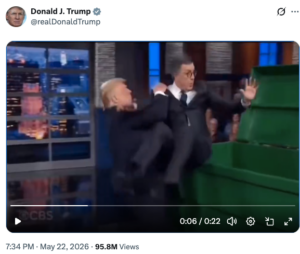
 May 22 — Trump posts a video celebrating the end of the Late Show with Stephen Colbert on May 21. Trump’s extraordinary behavior has never been exceeded in any American presidency.
May 28 — Trump refiles libel suit against the Wall Street Journal claiming that Trump did not write the birthday letter to Jeffrey Epstein that the newspaper published. The first suit was dismissed in April 2026.
May 28 — American Broadcasting Co. accuses Trump administration of political interference in licensing review.
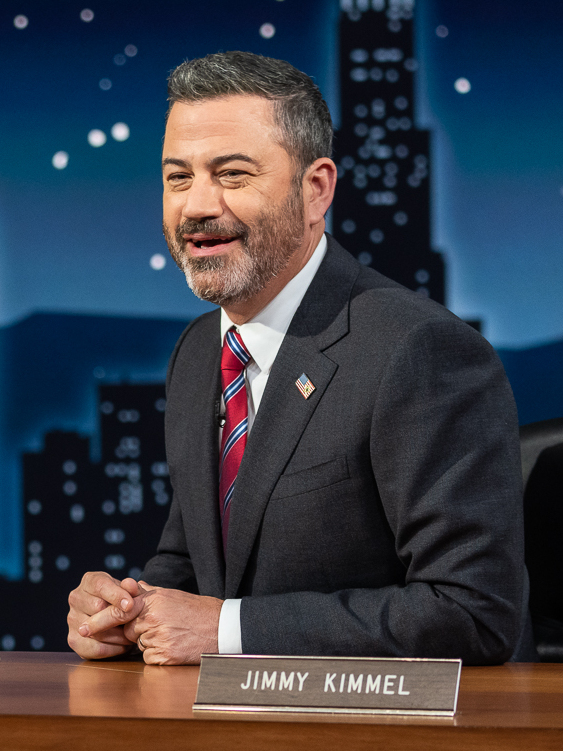
An April 23, 2026 Jimmy Kimmel joke about Melania Trump having “the glow of an expectant widow” has escalated into an FCC investigation of the ABC network.
According to Dr. Eliza Bechtold:
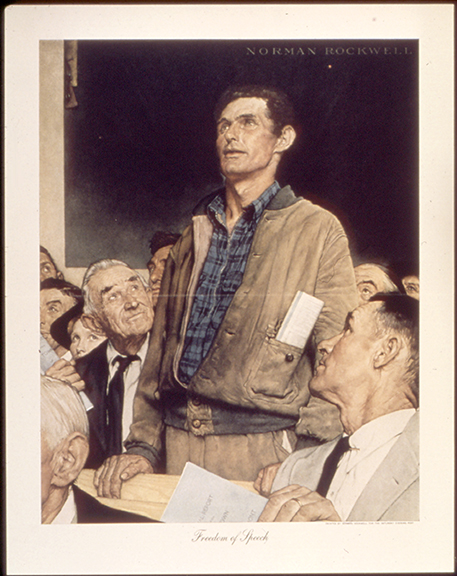
Actions taken by the administration to target broadcast networks and individuals for political speech are precisely what the First Amendment protects against. It was designed, among other things, to protect individuals, entities and the press from government interference by creating an open marketplace in which ideas compete freely.
This is particularly true for dissenting political speech, which is the core of the first amendment. This explains why government interference with speech based on “the specific motivating ideology or the opinion or perspective of the speaker” – known as “viewpoint discrimination” – is expressly prohibited.
Former FBI Director James Comey was indicted by a federal grand jury April 28, 2026 for posting a picture of seashells on a beach that spell out “8647,” which supposedly means ‘get rid of’ (86) Trump (47). The Dept. of Justice said in a news release: “This charge alleges that on May 15, 2025, by publicly posting an image over the internet via Instagram depicting “86 47”, which a reasonable recipient who is familiar with the circumstances would interpret as a serious expression of an intent to do harm to the President of the United States.” [sic].
PBS defunding reversed — March 31 — A federal judge has permanently blocked the Trump administration’s federal funding cuts for National Public Radio and the Public Broadcasting Service.
Pentagon press policy unconstitutional — March 20, 2026 — A federal judge struck down the Pentagon’s prior restraint press policy from September 2025, saying that it violated the First and Fifth Amendments to the Constitution.

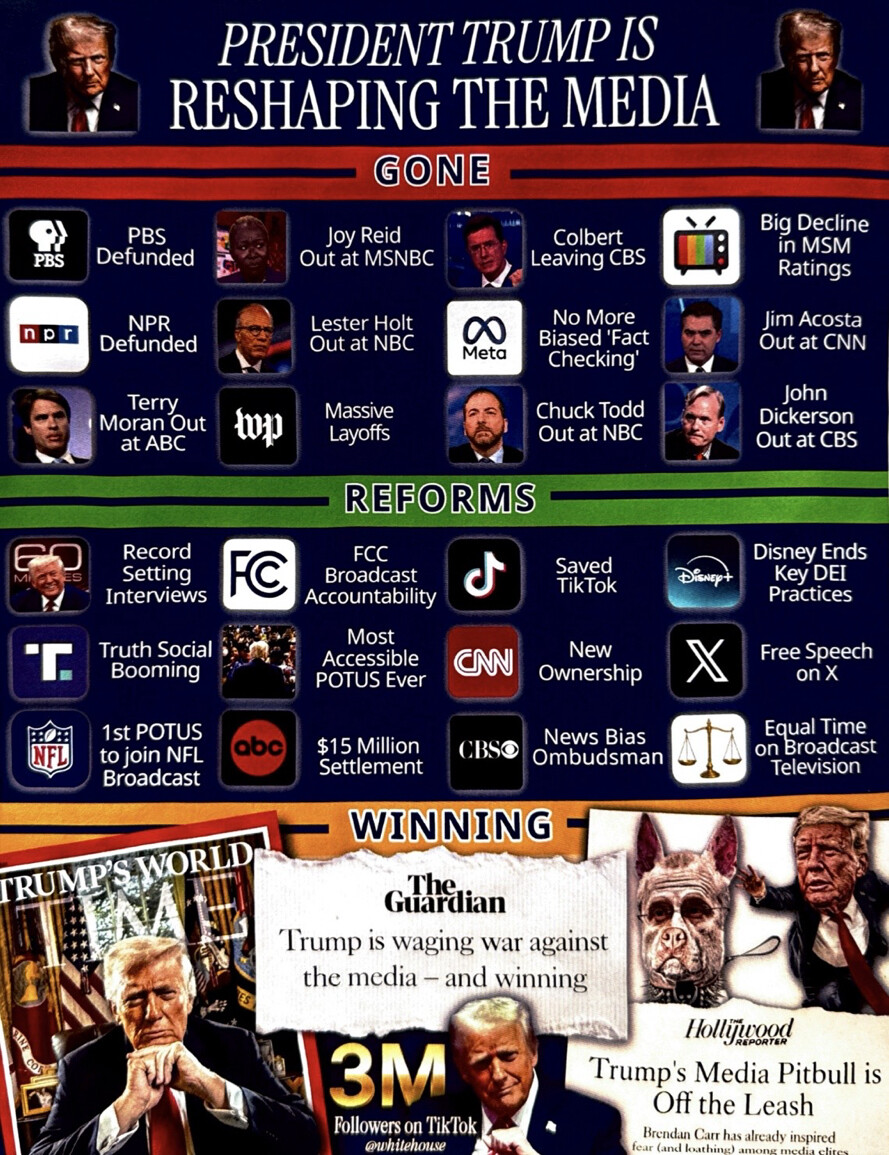
FCC’s Brendan Carr
More Threats— March 14-15 2026 — President Trump and FCC chair Brendan Carr threaten to revoke broadcast licenses over what they claim to be incorrect news items. This followed a Trump social media post March 14 and March 15 claiming that damage reports from a minor incident were deliberately distorted. “Their terrible reporting is the exact opposite of the actual facts!” Trump wrote. “They are truly sick and demented people that have no idea the damage they cause the United States of America.” (Note: First Amendment advocates have repeatedly warned that Trump’s “rage rhetoric” is dangerous.)
Is it constitutional to threaten revocation of licenses? In NRA v Vullo, a unanimous May 30, 2024 Supreme Court decision, Justice Sotomayor wrote for the court:
A government entity’s threat of invoking legal sanctions and other means of coercion against a third party to achieve the suppression of disfavored speech violates the First Amendment… Government officials cannot attempt to coerce private parties in order to punish or suppress views that the government disfavors. .
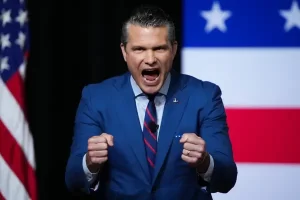
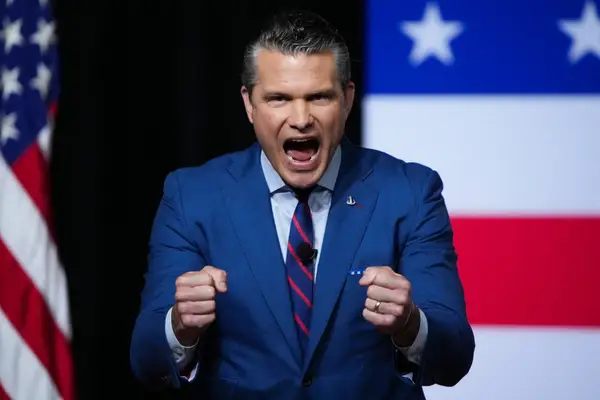
Pete Hegseth was not flattered. AFP / Pool photo.
Unflattering photos — March 10 — Defense secretary Pete Hegseth ordered photojournalists barred from Pentagon press conferences. Sources said Hegseth was upset over “unflattering” photos, although its difficult to understand which might have flattered him in the first place.
Continue reading →