
Privacy laws are not like defamation laws. The laws tend to vary from state to state and from situation to situation. But like defamation, privacy law distinguishes between public figures and private people. A lawsuit over defamatory truth about a private person is more likely to be successful than one about a public figure.

Privacy rights may involve both personal rights, such as the right to a good reputation, and property rights, such as the right to prohibit trespassing or to control the way your own picture is used by others for commercial advertising.
This important because personal rights are inalienable. They attached to a person’s life and can’t be taken away nor given away. They do not continue after death. On the other hand, property rights can be sold or inherited, and in fact, many misappropriation cases involve the estates of dead celebrities.
Digital privacy is an emerging aspect of privacy law involves the way social media companies collect private facts and sometimes misappropriate them through sale to advertisers. The right of people to protect their privacy from deep fakes or damaging video content is a new area of privacy law in the US, although it is well established in Europe.
History of privacy laws
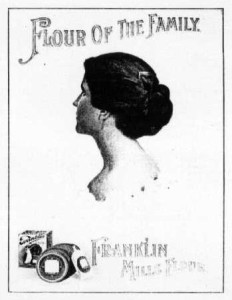
The call for privacy laws in the US began with an 1890 Harvard Law Review article by Louis Brandeis
(who later became a US Supreme Court judge). Brandeis noted that England and France had a variety of laws protecting privacy and thought that the US should adopt similar laws. He argued that a right to privacy does not prohibit publication of matters in the public interest, but should protect private people from becoming “victims of journalistic enterprise.” Although truth would be a defense in libel, Brandeis wrote, truth or falsehood is not the issue in the right of privacy, which “implies the right not merely to prevent inaccurate portrayal of private life, but to prevent its being depicted at all.”
This privacy principle was already part of common law, Brandeis argued, but had become more urgent with the intrusiveness of the yellow press and the arrival of halftone technology that allowed photos to be printed in the 1890s.
An early example of the way halftones challenged the law involved a 1902 case, Roberson v. Rochester Folding Box Co. The company used a picture of Abigail Roberson on a box of baking flour without her permission.
In a lawsuit, the family claimed the incident caused Ms. Roberson severe embarrassment and humiliation, but according to the N.Y. Court of Appeals, there was no law against the use of her likeness in advertising. Concern over what people saw as the theft of Ms. Roberson’s likeness for commercial reasons led to the passage of new laws against “misappropriation” in New York. A similar case occurred in Georgia two years later when New England Life Insurance Co. used a person’s name to sell insurance without permission. (Pavesich v. New England Life, 1905). In that case, the Georgia supreme court said there was a common law right of privacy that had been violated by the commercial use of someone’s identity.
More of the kind of protection Brandies sought for private people began to emerge in some state laws and with the increasing concern for personal rights in the 1960s, for example, with a Connecticut case in which distribution of contraceptive information by a doctor to a married couple was seen as protected by the couple’s privacy rights. Personal privacy was also a major point of law in Roe v. Wade, the Supreme Court said that right extended to the ability to decide when to conceive children or even to have an abortion. (These cases are not media – related, so we will not go into them here).
It’s important to note that the courts have generally defended the freedom of the news media to publish information of public importance. Even in cases where private people are thrust against their will into the public spotlight, such as Robin Howard and Oliver Sipple (below), invasion of privacy suits are often decided in favor of the news media.
Ethics and privacy law
Sometimes in privacy law, ethics and the law collide. For example, the professional ethical codes of the Society of Professional Journalists, the American Advertising Federation and the Public Relations Society of America emphasize minimizing harm and respecting privacy.
One important privacy case involved the identification of a sexual assault victim by a Georgia broadcaster, based on information lawfully obtained from public records. In Cox v Cohn, the court said that disclosing the victim’s name wasn’t an illegal invasion of privacy.
However, in this and many similar cases, it is highly unethical to disclose the names of victims or witnesses to crime unless they voluntarily come forward publicly, for example, as part of a “Take Back the Night” protest. (Also see the SPJ code, which says that journalists should minimize harm. Identifying crime victims or witnesses to crime in the media can be a serious breech of professional ethics.).
Defenses against privacy lawsuits:
- Newsworthiness, or public interest (for editorial content, mostly in misappropriation and false light cases)
- Public record, a Constitutional defense similar to privilege (especially publication of private facts cases, in regard to revealing names of private people involved with the courts or police)
- Consent of private individual involved, for example, a signed release of a model to allow commercial use of name, image or likeness. Note that consent is not needed for casual background / bystanders in news or public affairs video or photography.
Types of privacy lawsuits
Privacy law consists of four main types of torts. A fifth area has been included in recent years in some states (including Virginia):
- False Light — This is similar to libel. It often covers indirect libel, sometimes in photos or badly edited video. Usually the Sullivan standard applies (knowledge of falsity or reckless disregard for the truth) along with the standard holding that false light is something highly offensive to a reasonable person.
- Publication of Private Facts or unreasonable revelation of private facts that may be true but nevertheless embarrassing to private people.
- Intrusion on a person’s right to seclusion and personal privacy; Media cases usually involve physical intrusion by news media, often with cameras or recording devices, into the lives of celebrities and private people. Surveillance was an issue in the News of the World scandals of 2011 – 2025. Digital surveillance by social media companies may also fall under this privacy tort, but surveillance by government agencies involves Fourth Amendment rights.
- Misappropriation is the commercial misuse of a person’s name, image, or likeness (picture). This area of law can overlap or be similar to trademark and copyright.
- For private people, misappropriation is sometimes called “commercialization”
- For celebrities, misappropriation cases involve a “right of publicity”
- Intentional infliction of emotional distress — In some states, such as Virginia, intentional infliction of emotional distress, is sometimes used in place of false light, intrusion and publication of private facts. However, as the courts noted in Flynt v Falwell, this is not a substitute for defamation.
- Digital privacy issues — These sometimes fall in older categories of privacy law but often involve the new capabilities of media, such as deep fake videos through artificial intelligence.