
False light is a close cousin to libel but it has been used in cases where an omission of fact or the impression made by a video or an image gives a false impression. It may be the basis of a lawsuit if two criteria are met:
- The false impression would be highly offensive to a reasonable person, and
- The speaker / publisher knew the impression was false or acted with reckless disregard for the truth (the Sullivan “actual malice” standard).
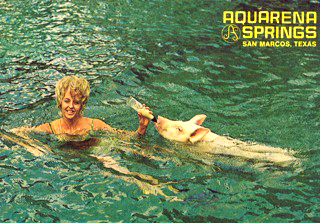
However, unlike libel, which is meant to compensate for injury to reputation, a false light tort is meant to compensate for hurt feelings, according to the First Amendment Encyclopedia. As a result, corporations cannot sue for false light.
Another difference between false light and libel is that a false statement is not required — For example, in Braun v. Flynt (5th Cir. 1984), the circuit court allowed a woman who was pictured in a men’s magazine to sue for the overall impression given by publication of her (non-explicit) photo in such a magazine.
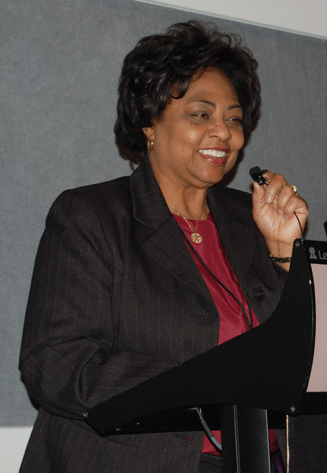
Shirley Sherrod, former USDA official
Sherrod v Brietbart, 2015
Sometimes a photo or a video clip is edited or captioned in a way that leads to a totally false conclusion. Although a video may be truthful in the sense that it depicts one slice of reality, there are times when editing creates a deceptive context or puts a person in a “false light.”
Consider the case of Shirley Sherrod who was fired after becoming the subject of a Brietbart news organization. In 2010 Sherrod gave a speech to a regional NAACP chapter about her experiences working for the USDA in a rural development program. A video clip of the speech became the subject of a national controversy because it seemed to show racism by African Americans against European Americans. In the video, Sherrod talked about a moment when she was tempted to exclude a few white farmers from USDA benefits. That is the only part of the video clip that was shown by right-wing web publisher Andrew Brietbart.
But there was more to the speech. It was true, Sherrod did talk about being tempted to exclude white people, but what Brietbart excluded was that she said that she could not, in good conscience, deny them the benefits they were due. She did perform her duty, without bias, as a USDA official. So Brietbart’s editing of the video led to a conclusion that was directly contrary to the meaning and context of the whole speech.
Sherrod filed a defamation lawsuit Feb. 11, 2011 in a US District Court which was essentially a “false light” privacy claim. In December, 2015, Sherrod and the Brietbart estate settled the suit. By that time, the Brietbart estate had plenty of money to settle with.
People’s Bank and Nellie Mitchell v. Globe International Publishing, 1992 — When photos of an elderly Arkansas woman delivering newspapers were published in the National Examiner in 1980, Nellie Mitchell did not object. Ten years later, when the same photos ran next to a fictional story about an elderly woman who had to quit her paper route because she became pregnant, Mitchell’s estate (the People’s Bank) sued on behalf of Mitchell under false light and won. (Also see Encyclopedia of Arkansas).
Cantrell v. Forest City Publishing Co 1974 — A reporter pretended to have interviewed widow of man killed in a West Virginia bridge collapse, describing her face and talking about her courage in refusing charity, and yet had never bothered to interview her. The court said he had acted with malice, that is, knowingly publishing something false. (See First Amendment encyclopedia)
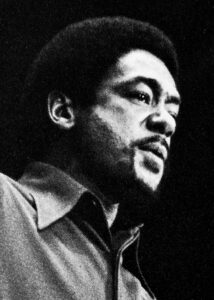
Bobby Seale
Bobby Seale v. Gramercy Pictures Inc., 1998 — Bobby Seale was a famous Black Panther in the 1960s and the Panthers were the subject of a Gramercy Pictures 1990s documentary video. Seale objected to the video’s characterization of a conversation with another member of the Black Panthers (Eldridge Cleaver) and sued unsuccessfully under the legal theory of false light. Seale was a public figure, so the court applied the Sullivan actual malice standard. Gramercy Pictures won.
Time v. Hill 1967, Time magazine published a story about a play based on a true story in which prison escapees had taken a family hostage. The events had occurred some 15 years beforehand. In the story there were a few inaccuracies, such as the idea that hostage takers had roughed up the Hill family and made sexual slurs. The family felt their privacy had been invaded. Judge Brennan said that “breathing room” for the First Amendment meant the need to tolerate some level of inaccuracy as much in reporting on a drama as in other political reporting. The family would have to prove actual malice, thus their status was something like that of an involuntary public figure in a libel suit.
Further reading
Cathy Tomaszewski, Privacy in Photographs: Misconception since Inception, 18 J. Marshall L. Rev. 969 (1985). Tomaszewski notes that false light occurs where, through the unintentional use of names, fictionalization, or misuse of name and pictures, a person is falsely portrayed to the public. E.g., Metzger v. Dell Publishing Co., 207 Misc. 182, 136 N.Y.S.2d 888 (1955). Here, an honest taxi driver’s photograph was used to illustrate a story about crooked cabbies.