
The Fairness Doctrine and the Equal Time Rule originated in an era when only a handful of radio and television networks were broadcasting. This scarcity of broadcast material led to structural and content regulations.
One of the most disputed areas of content regulation involved the Fairness Doctrine and it close cousin, the Equal Time Rule (Section 315 of Title 47).
The problem in the late 1920s and 1930s was that the foundations of democracy were being assaulted by those who mistakenly thought democratic systems were too weak to survive the onslaught of fascism. Studies had shown that propaganda can be very effective in a vacuum, but far less effective when more than a single point of view is presented.
The origins of the Equal Time Rule of 1934 and the Fairness Doctrine of 1949 came out of that scarcity of broadcast information.
One of the first cases was the 1929 Great Lakes Broadcasting Co. decision. In that case, the Federal Radio Commission said:
The public interest requires ample play for the free and fair competition of opposing views, and the Commission believes that the principle applies to all discussions of issues of importance to the public.
Not only did the FRC require radio broadcast license holders to fairly report the views of others, but also to refrain from expressing their own views. The fairness doctrine grew out of the belief that the limited number of broadcast frequencies available compelled the government to ensure that broadcasters did not use their stations simply as advocates of a single perspective. (See First Amendment Encyclopedia).
When the Federal Radio Commission became the Federal Communications Commission in 1934, the “Equal Time Rule” — Section 315 — was written into the law.
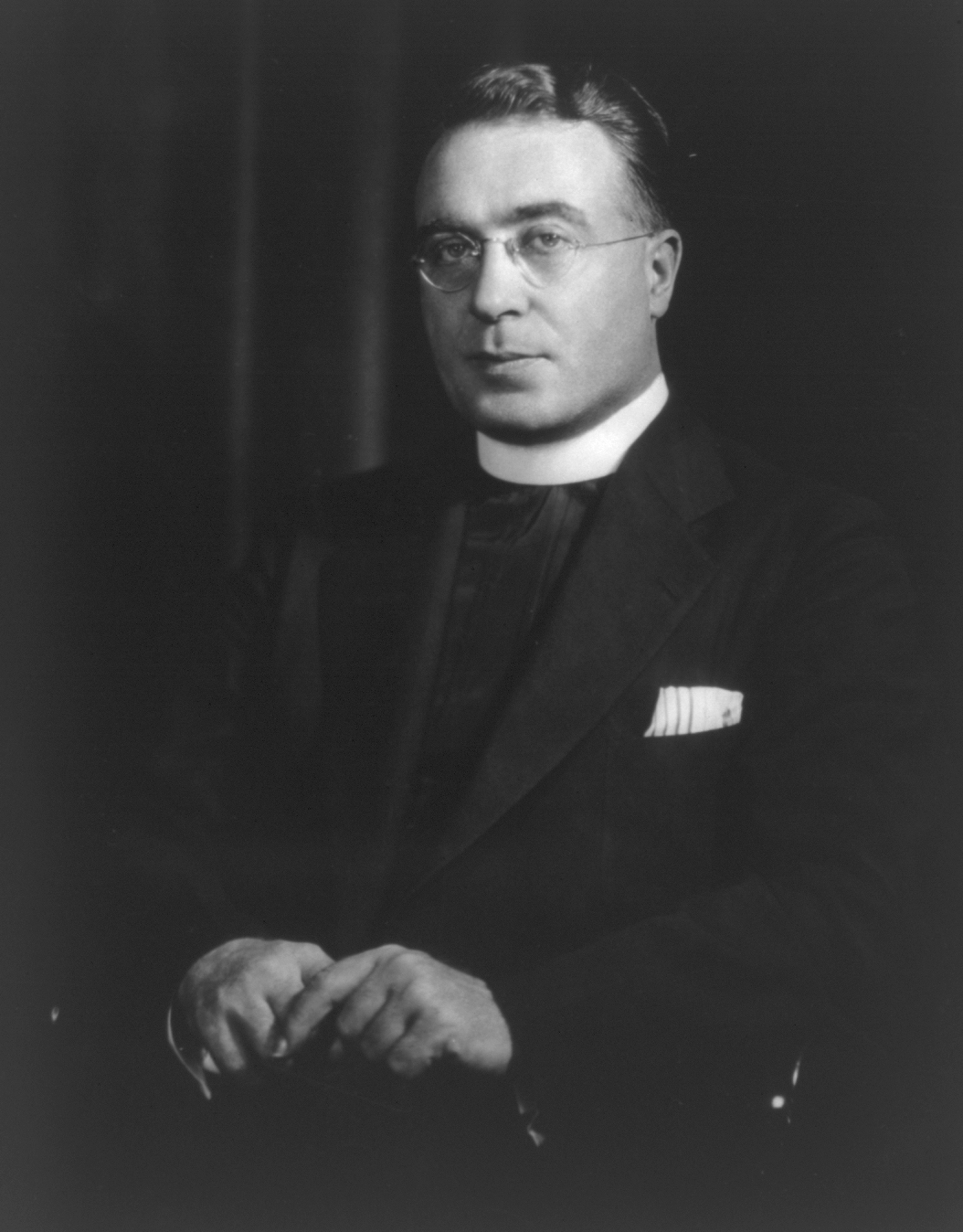
Father Charles Coughlin, pro-Nazi radio personality
Father Charles Coughlin
Despite a commitment to the principle of fairness and the idea that broadcast stations should ensure multiple points of view, highly partisan debates around religion and politics flourished in the 1930s. The best known American partisan in this era was Father Charles Coughlin, a popular pro-Nazi American radio personality. With a following of 16 million radio listeners, Coughlin tried to convince people that the Nazis were a logical antidote to communism in Germany.
The American radio program that led to Coughlin’s downfall was his reaction to attacks by Nazis in Germany on Jewish businesses and synagogues. The attacks took place on Nov. 9 and 10th, 1938, and became known as the Kristallnacht. Some 30,000 Jewish men were imprisoned without cause and kept in concentration camps. Hundreds of synagogues and thousands of businesses were burned to the ground. Global outrage followed, but Coughlin tried to excuse the Nazi atrocities:
“Jewish persecution only followed after Christians first were persecuted.” — Father Charles Coughlin
While the FCC wondered how to approach content regulation in hate speech cases, the National Association of Broadcasters changed the code of ethics on July 12, 1939 to bar the sale of airtime for the presentation of controversial issues except in political races. The effect was to take Coughlin and others like him off the air permanently. “This new rule closed the one loophole that remained in the networks’ and stations’ ability to censor controversial opinion: the dollar loophole,” said historian Michelle Hilmes. “The ability to pay was no longer [enough] … In fact, now broadcasters had an obligation to restrict all those outside the broad mainstream of political views” (Hilmes, 2006).
Mayflower Decision
The networks and the FCC agreed that in the future, no one single speaker would be allowed to have their own hour-long program, but rather, that a variety of speakers would be required on all programs. This was reinforced by the FCC’s 1941 Mayflower Decision, which banned radio broadcasters from taking sides in controversies, especially elections.
Fairness Doctrine
In 1949, the Fairness Doctrine was formally established to ensure both sides of controversial issues were presented by broadcasters. There were problems with trying to enforce fairness, but the original idea was to simply ensure that audiences were exposed to many points of view.
-
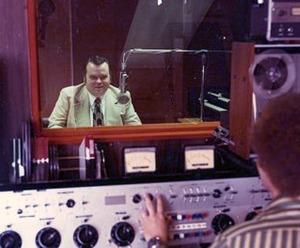
Billy Joe Hargis, evangelical minister and forerunner of right wing radio, was sued under the Fairness Doctrine for not including author Fred J. Cook in his broadcasts attacking Cook. (Center for Public Secrets)
Red Lion Broadcasting v. FCC, 1969 — The case involved the right of reply to an attack by “Christian Crusade” radio personality — Billy Joe Hargis — on book author Fred J. Cook who wrote about Barry Goldwater and the 1964 presidential campaign. In effect, it was a right-wing radio attack on a left wing book, and the FCC said the author ought to have his say. The court upheld the FCC’s Fairness Doctrine regulations that imposed a requirement for equal time to respond to personal attacks. It also upheld and entrenched the scarcity rationale. It is the right of viewers and listeners, not broadcasters, which is paramount, the court said. In contrast, note the Miami Herald v. Tornillo 1974 case, in which a print medium was not forced to give right of reply.
Friends of the Earth v. FCC 1971 — This case highlighted problems with the Fairness Doctrine. In some areas of controversy, it seemed easy to present alternative points of view. For example, advertising from the tobacco industry was balanced under the Fairness Doctrine by ads urging people to quit smoking. But in other areas of controversy, the Fairness Doctrine didn’t quite work. When Friends of the Earth, an environmental public interest group, sued the FCC under the Fairness Doctrine, wishing to present alternative views about leaded gasoline and gas guzzling cars, the FCC reinterpreted the Fairness Doctrine as not giving a right of reply in cases involving commercial advertising.
FCC v. League of Women Voters of California, 1984 — In a case challenging a law that said public broadcasting stations couldn’t editorialize, the court overturned a content restriction of broadcasters on First Amendment grounds. The case paved the way for abolition of most of Fairness Doctrine.
Syracuse Peace Council, 1987 — Formally ended the Fairness Doctrine following a set of Reagan-era hearings in 1985.
Section 315 – Equal time & Political advertising
When CBS lawyers told Stephen Colbert that he could not broadcast an interview with James Talarico on Feb. 17, 2026, Colbert moved the interview over to YouTube only and discussed the “equal time” controversy on his program. The Free Speech Center at MTSU described the flap in this article. The off disjunction between FCC control over “broadcasting” versus streaming is one of the major issues in broadcast regulation. As Ken Paulson, director of the MTSU Free Speech Center said: “The FCC has power only over century-old technology in a digital and AI world. Its days are numbered.”
Equal advertising access for political campaigns under the “Equal Time Rule” was part of the Communications Act of 1934. It was meant to ensure an even-handed approach to all federal political campaign advertising. If stations sell advertising to one candidate, they must sell the same amount to the other. This still applies to political candidates in an election cycle.
Exemptions for unpaid appearances of political figures in the news and on talk shows were also written into Section 315. These exemptions were narrowly defined during the era of the Fairness Doctrine (1949 – 1987) and then broadly defined afterwards. For example, starting in 1991, a group of FCC Media Bureau findings allowed exemptions for Fox, ABC, Paramount and Church Today as news interview programs. “A wide variety of shows can be eligible for an exemption as a bona fide news interview,” the FCC said at the time. In 2006, for instance, the FCC’s Media Bureau found that interviews on “The Tonight Show with Jay Leno” qualified for the equal opportunities exemption as a bona fide news interview.
The definition of a bona fine news interview program in 2006* was:
(1) whether the program is regularly scheduled; (2) whether the broadcaster or an independent producer controls the program; and (3) whether decisions on the content, participants, and format are based on newsworthiness, rather than partisan purposes, such as an intention to advance or harm an individual’s candidacy.
An FCC decision that a show qualifies for an exemption is fact specific and based on the show that was the subject of the request as it existed at the time of the request.
* Equal Opportunities Complaint Filed by Angelides for Governor Campaign Against 11 California Television Stations, Order, 21 FCC Rcd 11919, 11923, para. 11 (MB 2006)
In 2026, according to the Trump administration’s FCC, in a guidance document released Jan. 21, 2026, these exemptions were meant to be one-offs. They didn’t count as broad rules. According to this guidance document, every talk show and every guest on every program would have to be approved by the government.
Concerns have been raised that the industry has taken the Media Bureau’s 2006 staff-level decision to mean that the interview portion of all arguably similar entertainment programs— whether late night or daytime—are exempted from the section 315 equal opportunities requirement under a bona fide news exemption. This is not the case. As noted above, these decisions are fact specific and the exemptions are limited to the program that was the subject of the request.
Section 315 says:
- If a broadcaster makes the airwaves available to one candidate for an office, it must provide access for all candidates for that office;
- The broadcaster can’t censor messages from candidates.
- This also means that broadcasters are not responsible for libel or other issues in qualified campaign ads. (Farmer’s Co-op v WDAY, 1959)
- Federal political campaign advertising must be sold at lowest block rate
- “Appearance by a legally qualified candidate on any bona fide newscast, bona fide news interview, bona fide news documentary (if the appearance of the candidate is incidental to the presentation of the subject or subjects covered by the news documentary), or on-the-spot coverage of bona fide news events (including but not limited to political conventions and activities incidental thereto),
shall not be deemed to be use of a broadcasting station within the meaning of this subsection.
Who wants to bring back the Fairness Doctrine?
A lot of people would like to bring back the Fairness Doctrine, according to this February 2021 Washington Post Op-Ed by media law professor Victor Pickard.
While the Fairness Doctrine’s overall effectiveness and enforceability are debatable, at least it encouraged sensitivity against programming biases and empowered local communities to hold broadcasters accountable.
Activists used the Fairness Doctrine to help combat racist broadcasting, most notably in the WLBT-TV case when an anti-civil rights broadcaster in Jackson, Miss., was ultimately forced to give up their broadcasting license in the late 1960s. The Fairness Doctrine also enabled activists to contest advertising for tobacco and other harmful products. From the 1960s into the ’80s, consumer advocates like Ralph Nader saw it as an essential means for publicizing causes in the nation’s media.
But the Fairness Doctrine was an imperfect tool, and when the FCC voted to overturn it on Aug 4, 1987, conservatives like Rush Limbaugh were happy that the First Amendment seemed to be on their side. But conservatives found it useful. Phyllis Schlafly, among others, used the doctrine to gain media coverage for her Anti-Equal Rights Amendment campaign. Conservative activists like Reed Irvine saw it as a tool for including conservative voices within a media landscape that they perceived as predominantly liberal. Even right-wing groups such as Accuracy in Media and the NRA supported it well into the 1980s.
Today, according to former FCC members, the end of the Fairness Doctrine is seen as opening the door to more partisan media.