Category Archives: Libel

First Amendment Updates, 2025-26

FCC’s  Brendan  Carr

PBS defunding reversed — March 31 — A federal judge has permanently blocked the Trump  administration’s  federal funding cuts for National Public Radio and the Public Broadcasting Service.

Pentagon press policy unconstitutional — March 20, 2026 — A federal judge struck down the    Pentagon’s prior restraint press policy from September 2025,  saying that it violated the First and Fifth Amendments to the Constitution.

More ThreatsMarch 14-15 2026  President Trump and FCC chair Brendan Carr threaten to revoke broadcast licenses over what they claim to be  incorrect news items.  This followed a Trump social media post March 14  and March 15  claiming that damage reports from a minor incident were deliberately distorted. “Their terrible reporting is the exact opposite of the actual facts!” Trump wrote. “They are truly sick and demented people that have no idea the damage they cause the United States of America.”  (Note: First Amendment advocates have repeatedly warned that Trump’s “rage rhetoric” is dangerous. )  

Is it constitutional to threaten revocation of licenses?  In NRA v Vullo, a unanimous May 30, 2024 Supreme Court decision, Justice Sotomayor wrote for the court:

A government entity’s threat of invoking legal sanctions and other means of coercion against a third party  to achieve the suppression of disfavored speech violates the First Amendment… Government officials cannot attempt to coerce private parties in order to punish or suppress views that the government disfavors.  .
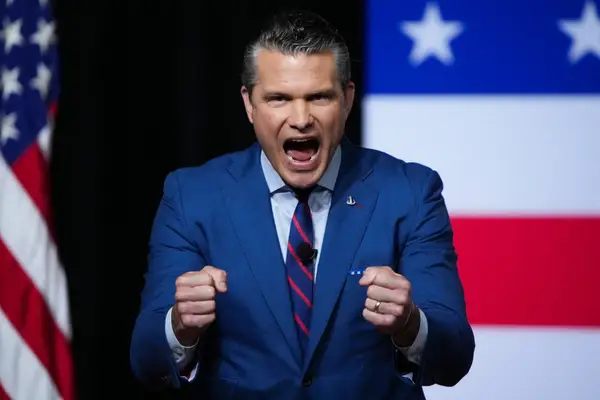
Pete Hegseth was not flattered. AFP / Pool photo.

Unflattering photos — March 10 — Defense secretary Pete Hegseth ordered photojournalists barred from Pentagon press conferences. Sources said Hegseth was upset over “unflattering” photos, although its difficult to understand which  might have flattered him in the first place.
Deaths of soldiers only reported to make Trump look bad — March 4 — During a press briefing on March 4, Pete Hegseth claimed that the press was only reporting on the deaths of American soldiers in order to “make the president look bad.”  Despite his time as a Fox news anchor, Hegseth clearly does not understand the role of the media.

Interview blockedFeb 17, 2026 An interview with Texas democratic candidate for senate James Talarico, was blocked from the CBS broadcast of the Late Show with Stephen Colbert under (supposedly) the Equal Time Rule.

Threats — Jan 17, 2026 — The White House threatens a lawsuit against CBS if it edits a  Trump interview.  White House press secretary Karoline Leavitt told a CBS producer that the network news program had to run a full interview with Donald Trump, without edits, or CBS would be sued.  “Not long ago, the notion of a White House press secretary’s casually threatening a lawsuit if a journalist does not obey her orders would be shocking,” the New York Times said in a news article about the threat. “But Mr. Trump has made abundantly clear that he is serious about pursuing legal or regulatory action against media outlets whose coverage displeases him.”

The litigation Trump threatens is nearly always frivolous, capricious, and lacking an any serious merit whatsoever. When not “settled” out of court by media organizations under Justice Department pressure for merger approvals, the suits are thrown out of court.  This is an entirely abnormal and unprecedented use of executive power to oppose the spirit and letter of the First Amendment.

Reporter’s home searched — Jan 13, 2026 — FBI agents executed a search warrant on Washington Post reporter Hannah Natanson, whose beat included a wave of firings and layoff of federal workers. The search may well be illegal under the Privacy Protection Act of 1980.  UPDATE: Feb. 24 — The judge who approved the search warrant chastised prosecutors who did not tell him about the Privacy Protection Act of 1980,  a federal law that limits ex-parte search warrants of newsrooms or reporters working files. Continue reading

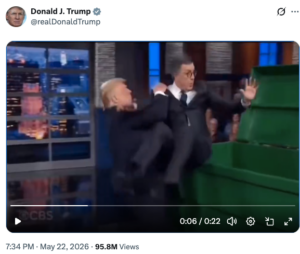
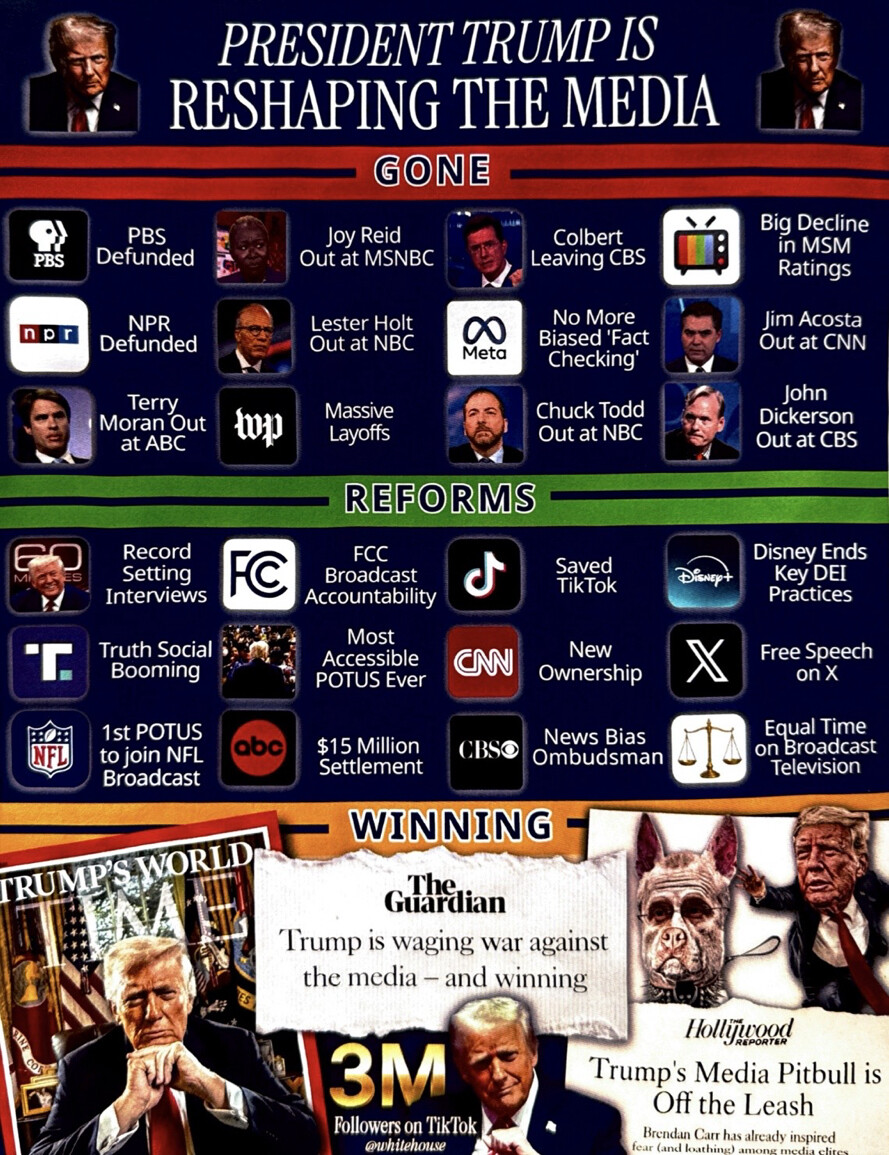
Trump brags he’s “reshaping the media”

This astonishing admission of government interference with the press was posted on Trump’s social media account. Trump is openly violating the First Amendment. See @realDonaldTrump March 14, 2026.

How the First Amendment protects you

By Ray Brescia 
Associate Dean, Albany Law School, via The Conversation,

Imagine a protest outside the funeral of a popular political leader, with some of the protesters celebrating the death and holding signs that say things like “God Hates the USA/Thank God for 9/11,” “America is Doomed” and “Don’t Pray for the USA.”

No matter the political leanings of that leader, most Americans would probably abhor such a protest and those signs. Why would (we) tolerate such activities, no matter how distasteful? The First Amendment.

The situation described above is taken from an actual protest, though it did not involve the funeral of a political figure. Instead, members of the Westboro Baptist Church protested outside the funeral of Marine Lance Cpl. Matthew Snyder, a U.S. service member killed in Iraq.

Through demonstrations like this, members of this group were conveying their belief that the U.S. is overly tolerant of those they perceive as sinners, especially people from the LGBTQ community, and that the death of U.S. soldiers should be recognized as divine retribution for such sinfulness.

Snyder’s family sued for intentional infliction of emotional distress, among other claims. A jury issued a US$5 million jury award in favor of the family of the deceased service member. But in a nearly unanimous decision issued in 2011, the U.S. Supreme Court found that the First Amendment insulated the protesters from such a judgment.

This holding is particularly instructive today.

Continue reading

Climate scientist wins libel suit

US climate scientist Michael Mann won his longstanding libel suit against right-wing climate deniers on Feb. 8, 2024, with a jury award of $1 million in puntive damages. 

The lawsuit began in 2012, when Mann accused Rand Simberg, a former adjunct scholar at the Competitive Enterprise Institute, and Mark Steyn, a contributor to National Review, of defamation when they alleged that his work was so fraudulent it was like child molestation.     

Scientists see  the verdict “as a warning to those who attack scientists working in controversial fields, including climate science and public health,” according to  Nature magazine.   

The question in libel is whether the defendant knowingly published a falsehood or acted in reckless disregard for the truth.  In testimony,  Simberg and Steyn both insisted that they do not agree with Mann’s climate science, so the question was whether or not they were reckless.

“The trial transported observers back to 2012, the heyday of the blogosphere and an era of rancorous polemics over the existence of global warming, what the psychology researcher and climate misinformation blogger John Cook called “a feral time,” said a New York Times article.

A federal court opinion from 2016  located here: Competitive Enterprise Institute v Mann.   The 2024 decision is not yet on Nexis, SCOTUS blog, or other legal sources. Also see Alito Dissent from denial of cert, 2021.


Alex Jones and libelous hate speech

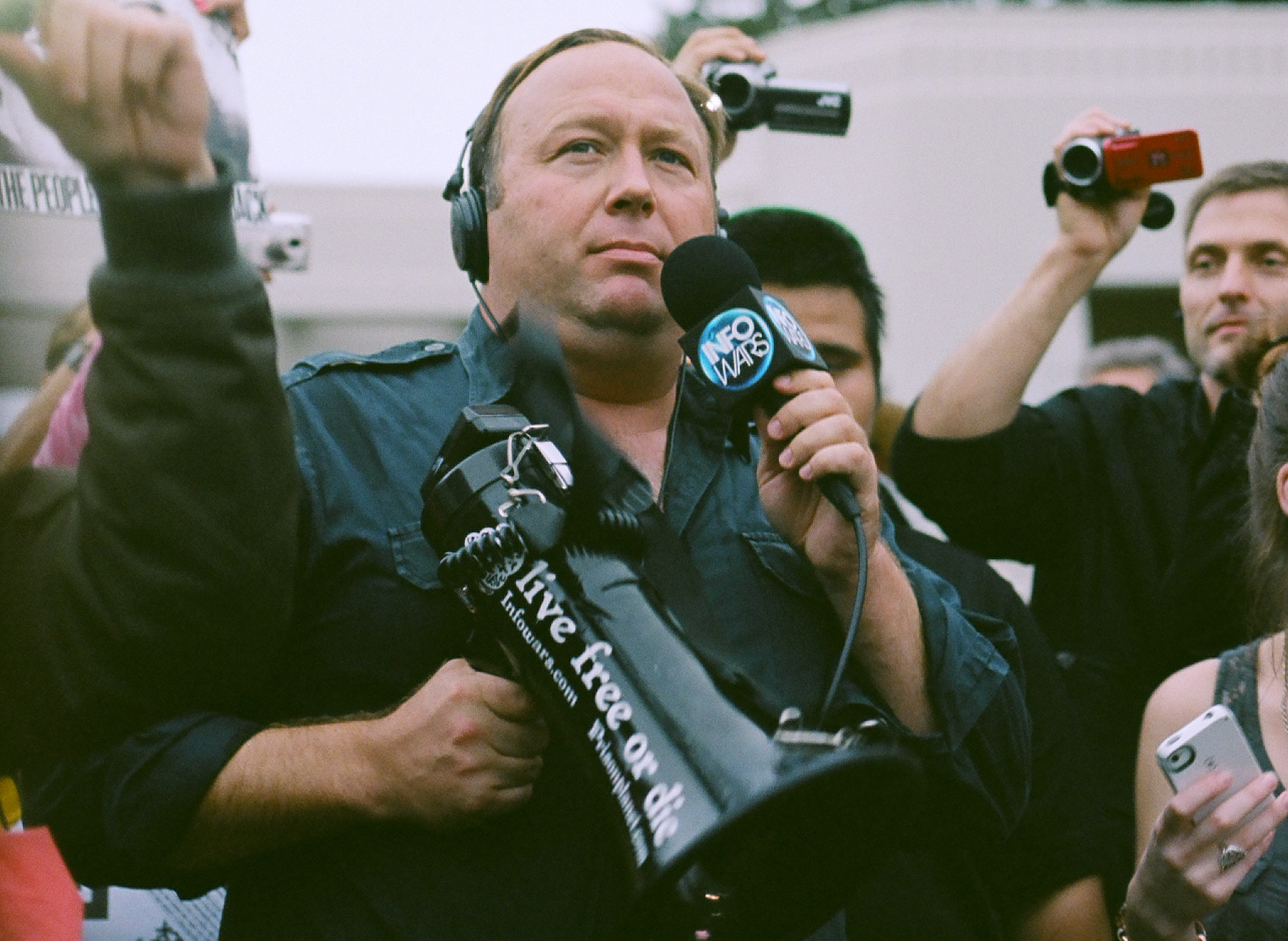
Alex Jones (Wikipedia).

Alex Jones is bankrupt. The host and owner of  the far-right fake news conspiracy-peddling website “Infowars.com” owed $1.5 billion dollars by the end of 2022 to people harmed by his lies about  the massacre at an elementary school in Sandy Hook CT a decade beforehand.

The cascade of losses in libel suits began with a Texas jury’s Aug. 5, 2022 decision to award  $50 million in actual and punitive damages to parents of the massacre’s victims. Four more libel suits  in Texas and Connecticut also ended with guilty verdicts and heavy fines.

Jones’ lies about Sandy Hook began within hours of the massacre, and were frequently  repeated since then. He falsely claimed that the Sandy Hook elementary school massacre of 2012 was a hoax and  that the parents of the children killed  at the school were “crisis actors.”  As a result, Sandy Hook parents were subjected to harassment and other damages, on top of the profound grief of losing their children. One family has had to move 10 times to avoid Jones’ followers.

Jones’ attorneys argued that the First Amendment protects his right to make mistakes and that other people, not Jones, were to blame for the harassment.

But it’s too late for that argument. Jones already lost the first Texas libel suit by refusing to cooperate with the court, and default judgments were issued.  The only question in the Texas case and others involves the amount of damages.  Continue reading

Remembering Oprah’s mad cow libel case

By Asheley R. Landrum, Texas Tech University

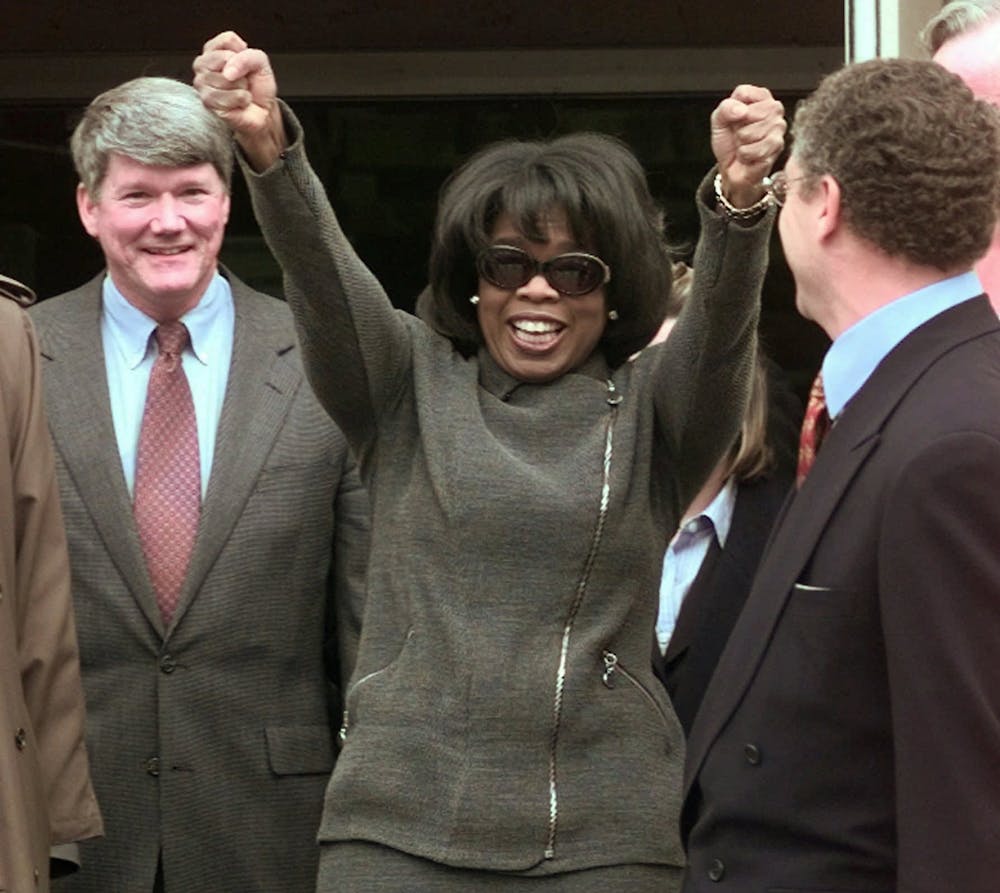
Oprah celebrates the ruling in her favor on Feb. 26. 1998. AP Photo/LM Otero

More than twenty years ago (1998), images of staggering cattle and descriptions of brains resembling Swiss cheese became associated with one of the most popular television programs of the day when Texas Panhandle cattlemen sued “The Oprah Winfrey Show” for defamation under Texas’ “veggie libel law.” They claimed the program’s negative portrayal of their business caused a steep decline of beef prices.

On the surface, this conflict looked like a battle between an industry and the TV producers who portrayed it negatively. But at its heart was some complicated science that had the potential to scare the public and be sensationalized by the media.

Today’s practitioners of science communication grapple with the difficulty of transmitting science information via the media to a lay audience. This 1998 trial serves as a rare public case study documenting the media’s imperfect attempts to clarify the science of mad cow disease in the midst of a celebrity spectacle.

Ultimately Oprah won the legal case. But how did the public’s understanding of the science fare?

Continue reading

Appeal in Sarah Palin’s libel loss could set up test of Sullivan standard

Sarah Palin, 2012, by Gage Skidmore, CC / Wikipedia.

By Bill Kovarik
Published in The Conversation, Feb. 15, 2022 under a Creative Commons license for non-profit republication. 

To the numerous challenges facing the U.S. media in recent years, add a libel case against The New York Times – lost by Sarah Palin, but now seemingly headed to appeal and perhaps on to the highest court in the land.

On Feb. 15, 2022, a jury rejected Palin’s claim. As it happened, its verdict was more or less moot. The presiding judge had already said he would dismiss the case on the grounds that the former Alaska governor’s legal team had failed to reach the bar for proving she had been defamed.

A Times editor admitted a mistake in suggesting in a 2017 opinion piece that there was a link between Palin’s rhetoric and a mass shooting. But under the so-called Sullivan standard – a rule in place for nearly 60 years that makes it difficult for public figures to successfully sue for defamation – neither the jury nor the judge considered the error significant enough for Palin to win her case.

But in reaching his decision in the Palin case, the federal judge suggested that it was likely not to be the end of the matter – indeed, an appeal is expected.

And that has defenders of a free press worried. Legal scholars note that recent opinions by Supreme Court Justices Clarence Thomas and Neil Gorsuch favor overturning the Sullivan standard – a move that would take away a key protection for the press against libel suits by vindictive public officials. Continue reading

Another laughable libel suit

The last time a sitting president sued a newspaper for libel, laughter broke out on the floor of the US Senate.

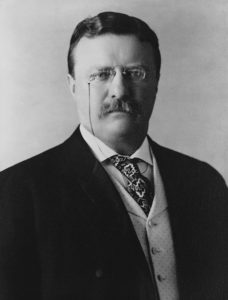
That was December 15, 1908, when president Teddy Roosevelt sued the  New York World  newspaper after it linked him to corruption over the Panama Canal. Roosevelt ordered federal attorneys to file criminal libel suits against newspapers  all over the country. Democrats were outraged, once they stopped laughing.  One US attorney resigned in protest rather than prosecute Teddy’s critics for libel.

The main target of the suits, New York World newspaper publisher Joseph Pulitzer, famously said:  “He cannot muzzle the World.”  (See Pulitzer’s Reply Dec. 16, 1908)

Roosevelt’s lawsuit,  US v Press Publishing,  used to be considered the “last gasp” of seditious libel.

The US Supreme Court didn’t think much of the suit, handing down a ruling  in 1911 that was only two pages long. The ruling ignored the merits of the case and simply sustained an objection by Press Publishing (the owner of the NY World)  that “the court has no jurisdiction in this case, because there is no statute of the United States authorizing the prosecution.”

The case was thought to be a First Amendment landmark at the time, but it is barely remembered in communications law textbooks today.  After all, what sitting president would lower himself to file such a suit?  Even outright allegations of murder did not tempt President Bill Clinton to wield that cudgel against critics like Jerry Falwell. What president would be so foolish as to sue for libel just because a newspaper published a disagreeable opinion?

Which brings us to Donald Trump, the president who defied expectations. Tump  sued the New York Times  on Feb. 26, 2020, and the Washington Post, on March  3, 2020, for  an apparently disagreeable opinion about Trump’s relationship with Russian dictator Vladimir Putin. In the suit, Trump claimed that the Times knowingly published the supposedly false charge that there was a “quid pro quo” with the Russians in return for  their help in the 2016 election.  (The plaintiff’s petition can be read here.) 

This “quid pro quo” was described in  an op-ed written by former New York Times editor Max Frankel and published March 27, 2019.  In the op-ed, Frankel rejected  small concerns about “collusion” with Russia in the Trump campaign. The much larger issue, he said, involved the relationship between Trump and Putin.

(UPDATE: The story continues but the court dismissed Trump’s lawsuit in March, 2021).
Continue reading

Trump dossier libel suit dismissed

In a victory for First Amendment advocates,  a federal court ruled Dec. 19, 2018  that news articles about the Steel Dossier, which alleges illegal and immoral acts by Donald Trump and his campaign in 2016, were protected by the “privilege” defense against defamation suits.

The dossier (memo) was written by former British Intelligence head of the Russia desk, Christopher Steele and circulated in the months before and after the November 2016 election.   It was  published  January 10, 2017, by BuzzFeed News with the headline:   These Reports Allege Trump Has Deep Ties to Russia.

BuzzFeed cautioned that the dossier  “includes specific, unverified, and potentially unverifiable allegations of contact between Trump aides and Russian operatives, and graphic claims of sexual acts documented by the Russians.”

Although the major subject of the dossier was Donald Trump and his attorneys and advisors, the suit was filed by Aleksej Gubarev, a Russian whose name was peripheral to the events described in the dossier.     

In her ruling, federal judge Ursula Ungaro of  Miami granted a motion by Buzzfeed magazine to dismiss the lawsuit, saying that the press was protected by the legal doctrine of  fair report privilege.   

Privilege is one of three major defenses against libel suits. (The other two are truth and fair comment).   The defense of privilege gives journalists the ability to report on official government proceedings whether or not information in the proceedings is provably true or not.   The doctrine of privilege allows unfettered news reporting of conflicting ideas or versions of events that may surface in trials, executive memos or congressional hearings.

According to a Columbia University Global Freedom of Expression article,  the decision turned on the question of whether the report was an official proceeding.  In many cases, courts have interpreted proceedings to be official whether or not they are open to the public.

Hollywood star sues for ‘false light’

Hollywood star Olivia de Havilland is suing FX network and Ryan Murphy Productions for “false light” over the way she is portrayed in a docudrama “Feud” that concerns a rivalry between two other stars, Bette Davis and Joan Crawford.  Davis and Crawford are dead, but de Havilland, at age 101, is still very much alive.
“I believe in the right to free speech,” says de Havilland,   “but it certainly must not be abused by using it to protect published falsehoods or to improperly benefit from the use of someone’s name and reputation without their consent.

The suit raises the interesting question of how much a living historical figure can control what is said about them.   See: New York Times story March 3, 2018.