Author Archives: Bill

Recent Issues & Cases

SUPREME COURT Ends 2023 term

Several important decisions on free speech issues were handed down by the Supreme Court in the session ending June 30, 2023.   Linda Greenhouse of the New York Times notes that this session caps the triumph of what would have been an unimaginably right-wing agenda when John Roberts became Chief Justice in 2005.

Of course the big swing to religious law was Dobbs v Jackson Women’s Health Organization last year overturning Roe v Wade. This year it was 303 Creative v. Elenis — a case involving the balance between individual religious rights and public accommodations.  In 303 Creative, the Supreme Court ruled that the First Amendment prohibits the state of Colorado from forcing a website designer to work with content that conflicts with her beliefs,  such as gay marriage.

The case overturns a ban on commercial discrimination based on sexual  orientation in the 2018 decision in Masterpiece Cakeshop, Ltd. v. Colorado Civil Rights Commission.  The 303 Creative case also calls into question the 2015 case  Obergefell v. Hodges in which the court said same-sex marriages were unconstitutional. 

Justice Sonia Sotomayor’s dissenting opinion  in 303 Creative notes how far the decision crosses the line separating church and state: “Today, the court, for the first time in its history, grants a business open to the public a constitutional right to refuse to serve members of a protected class.”  This is a backlash against  people’s rights, she says. “New forms of inclusion have been met with  reactionary exclusion. This is heartbreaking. Sadly, it is also familiar. When the civil rights and women’s rights movements sought equality in public life, some public establishments refused. Some even claimed, based on sincere religious beliefs, constitutional rights to discriminate. The brave Justices who once sat on this Court decisively rejected those claims.”

Other cases this term included: 

Counterman v. Colorado   — A “true threats” case — The court said that the First Amendment limits laws that make it a crime to threaten people on the internet. In such cases, governments  must prove that the defendant acted with a culpable mental state, and not only that his words were objectively threatening. The ACLU commended the court’s decision. The case is also significant in that the  court used the New York Times v Sullivan standard, which two of the justices (Thomas and Gorsuch) would like to overturn. That now seems unlikely.

US v Hansen– Criminal solicitation —  A law against encouraging illegal immigration is constitutional, the court said, so long as it applies specifically to criminal acts and not to general ideas about immigration, which are protected under the First Amendment.

Groff v. DeJoy —  Religious accommodation — A US Postal Service delivery worker sued because he was being forced to work on Sundays.  “Title VII requires an employer that denies a religious accommodation to show that the burden of granting an accommodation would result in substantial increased costs in relation to the conduct of its particular business,” the court said.

Gonzalez v Google LLC and Twitter v Taamineh both involved the extent of protection for YouTube (Google) in automatically posting and recommending terrorist recruiting videos; they also involved the broader question of how social media and the internet are to be regulated. The SCOTUS Blog has a valuable repository of documents about the case. In both cases, the anti-terrorism law was held NOT to apply, and no decision was made about Section 230 specifically or whether or not to change the way social media and the internet are regulated.

censorship

Tic-Tok banned in 19 US states, and often on wifi at public universities, because it poses a theoretical national security risk by giving the Chinese government an ability to monitor users.

Journalists arrested in Asheville, NC, for taking video of police enforced  evictions.  They were convicted of trespassing in April, 2023, but in May, forty five  journalism and human rights organizations wrote in support of an appeal.  And on May 30, defendants Matilda Bliss and Melissa Coit filed a  motion to dismiss the charges. 

Proposals for book bans and gag orders in education have increased 250 percent in 2022 compared to 2o21, according to a study by PEN America, a non-profit free speech advocacy group.

libel

Voting machine company libel suits continue against Fox News,  One America News Network and three  Trump advisors, despite the settlement of the Dominion case on April 19, 2023.  That settlement came after Fox underestimated the strength of Dominion’s case against them, according to a May 27, 2023 NY Times article. 

The Smartmatic voting machine company is the second to bring a libel case against Fox over lies about election fraud in 2020.  Participants in that case took depositions in the fall of 2023 and say the trial might be scheduled for 2025. The allegation is that Fox and OANN aired a pattern of defamatory claims from Trump supporters about illegal  manipulation of vote counts that threw the 2020 election to Joe Biden. Depositions in advance of the trial have shown that Fox personalities did not believe the claims at the time they were aired.  One Fox personality, Tucker Carlson, was forced to resign from Fox News due (in part) to the disgrace he brought onto the network.

privacy

New European regulations on digital privacy will take effect in 2023 and 2024.  As part of the new push to improve digital privacy, the EU fined Facebook / Meta   1.2 billion Euros for privacy violations on May 22, 2023.

Digital media

State of Missouri v Biden — Federal government pressure on social media  sites is a violation of their First Amendment rights according to a sweeping decision by a federal judge. A July 4 decision in a Louisiana federal court restricted communication between the Biden administration and social media platforms — calling it “Orwellian” violation of the First Amendment. The Biden administration disagrees.  Fox headlined the issue: “Big Tech Censorship Goes to Court.

Section 230,  (of Title 47, US Code)   the social media liability shield, still stands after two similar cases Gonzalez v Google LLC and Twitter v Taamineh  by the US  Supreme Court on May 18, 2023 (noted above).

Section  230 is unpopular on both sides of the political aisles. The  Biden White House has  renewed the call for repeal of  the liability shield for social media companies in of 2022.   President Joe Biden is focused on six reform principles, which also include stronger competition  and privacy protection laws, greater transparency and more  consideration of mental health issues.

The Brookings Institution has a Guide for Conceptualizing the debate over  Section 230, such as individual harms, general harms and policy challenges.

COPYRIGHT

Dr Dre sends “cease & desist” letter to Rep. Marjory Taylor Green, who is using his music without permission on social media.

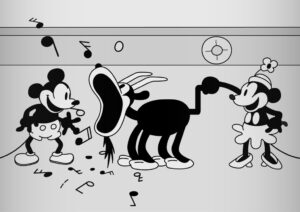
Steamboat Willie, the first Mickey Mouse cartoon, goes into the public domain (loses copyright protection) this year. What will it mean? Not that much, says Brooks Barnes in the New York Times Dec. 27.  

A  federal court in California rejected Facebook’s  “safe harbor”  Section 230 argument in a copyright case in January 2023.

Close to home 

Virginia state consumer data protection act took effect Jan 1, 2023.  Critics say it doesn’t go far enough,

Social media:   State Del. Nadarius Clark, D-Portsmouth, is proposing an investigation into the impacts of social media on Virginians.

Anti-fraternity ordinance  in Radford — Sec. 120.1-64.   entitled “Additional requirements for Greek organizations/signs”  — remains in effect, despite  Reed v Town of Gilbert, 2015, and the “content discrimination principle.”

Protests curtailed in Hong Kong

Protest in Hong Kong, March 2023, held behind “crime tape.”  (Associated Press)

According to the Hong Kong Democracy Council,  authorities have jailed more than 1,500 political prisoners since 2019, half of whom are under the age of 25. https://www.washingtonpost.com/opinions/2023/07/01/hong-kong-china-crackdown-democracy/

John Stewart and the Fox libel suit

This segment of The Problem with John Stewart was broadcast before the Fox – Dominion settlement      announced April 19, 2023.

Pushing back against online harrassment

Federal agencies will fight online harassment  across four main lines of effort, the Biden administration said March 3, 2023. These are prevention, survivor support, accountability, and research, according to a White House announcement.

Since its launch, the Task Force  to Address Online Harassment and Abuse has heard from hundreds of stakeholders—survivors, advocates, parents, educators, law enforcement, medical and legal professionals, and researchers—who discussed the significant harm caused by online harassment and abuse.

The Task Force is part of Biden’s call to action in the State of Union for solutions to address online safety, health, privacy, and accountability.

Alex Jones and libelous hate speech

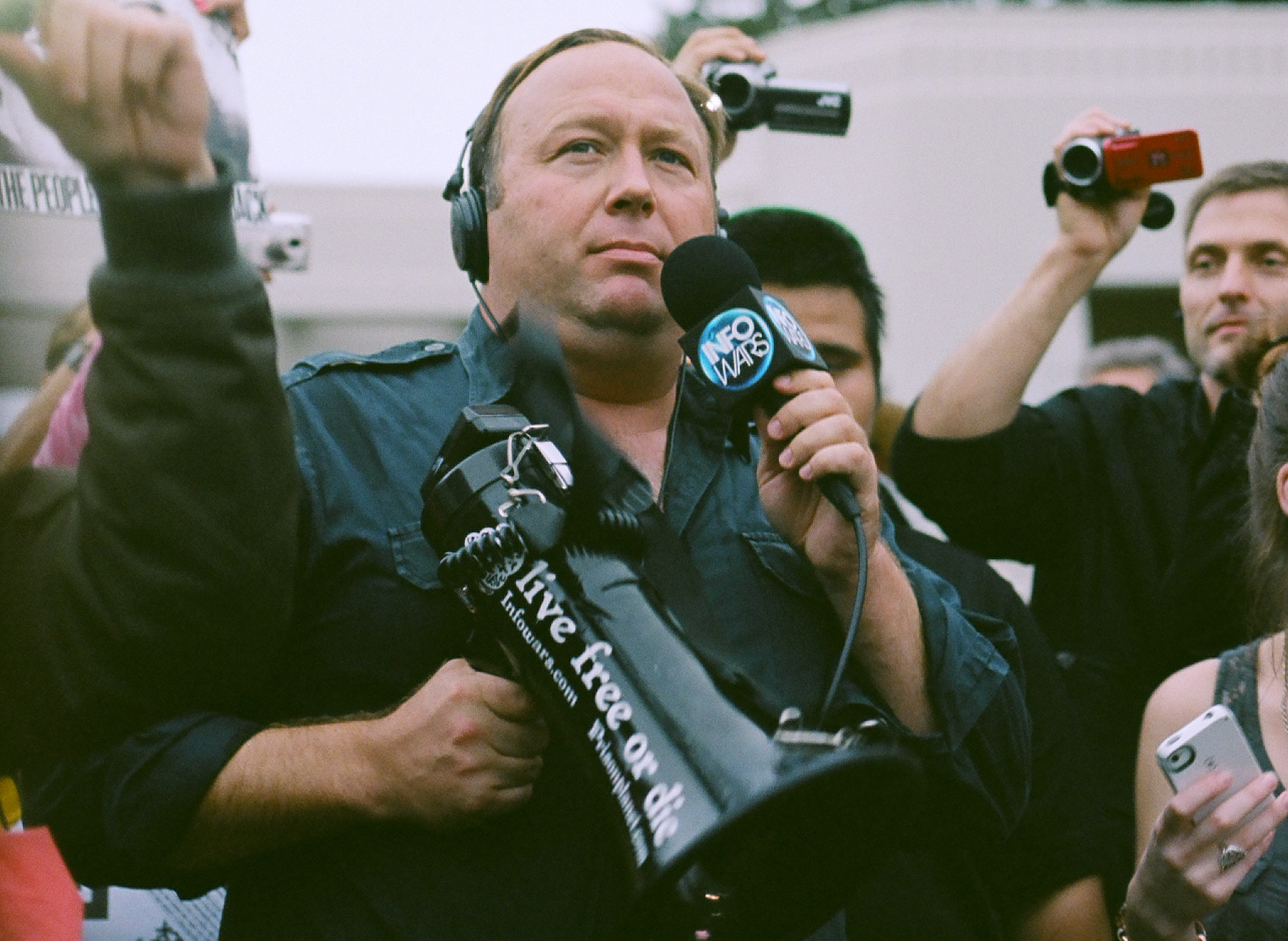
Alex Jones (Wikipedia).

Alex Jones is bankrupt. The host and owner of  the far-right fake news conspiracy-peddling website “Infowars.com” owed $1.5 billion dollars by the end of 2022 to people harmed by his lies about  the massacre at an elementary school in Sandy Hook CT a decade beforehand.

The cascade of losses in libel suits began with a Texas jury’s Aug. 5, 2022 decision to award  $50 million in actual and punitive damages to parents of the massacre’s victims. Four more libel suits  in Texas and Connecticut also ended with guilty verdicts and heavy fines.

Jones’ lies about Sandy Hook began within hours of the massacre, and were frequently  repeated since then. He falsely claimed that the Sandy Hook elementary school massacre of 2012 was a hoax and  that the parents of the children killed  at the school were “crisis actors.”  As a result, Sandy Hook parents were subjected to harassment and other damages, on top of the profound grief of losing their children. One family has had to move 10 times to avoid Jones’ followers.

Jones’ attorneys argued that the First Amendment protects his right to make mistakes and that other people, not Jones, were to blame for the harassment.

But it’s too late for that argument. Jones already lost the first Texas libel suit by refusing to cooperate with the court, and default judgments were issued.  The only question in the Texas case and others involves the amount of damages.  Continue reading

Remembering Oprah’s mad cow libel case

By Asheley R. Landrum, Texas Tech University

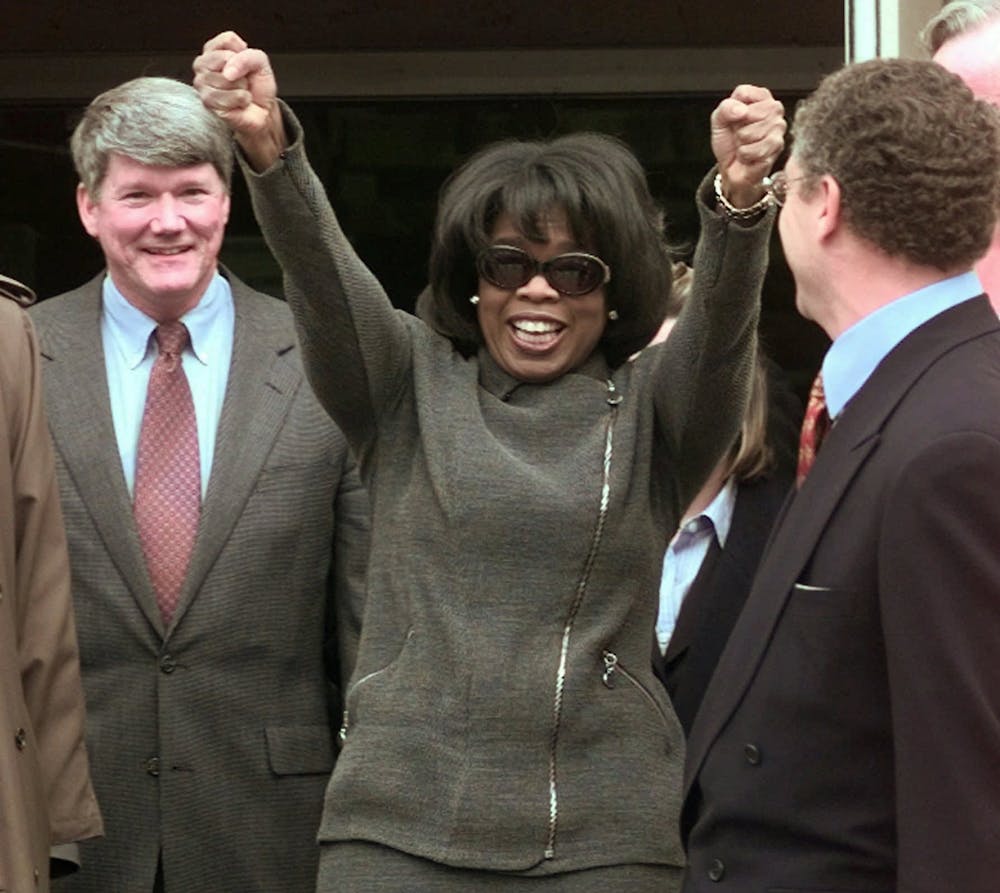
Oprah celebrates the ruling in her favor on Feb. 26. 1998. AP Photo/LM Otero

More than twenty years ago (1998), images of staggering cattle and descriptions of brains resembling Swiss cheese became associated with one of the most popular television programs of the day when Texas Panhandle cattlemen sued “The Oprah Winfrey Show” for defamation under Texas’ “veggie libel law.” They claimed the program’s negative portrayal of their business caused a steep decline of beef prices.

On the surface, this conflict looked like a battle between an industry and the TV producers who portrayed it negatively. But at its heart was some complicated science that had the potential to scare the public and be sensationalized by the media.

Today’s practitioners of science communication grapple with the difficulty of transmitting science information via the media to a lay audience. This 1998 trial serves as a rare public case study documenting the media’s imperfect attempts to clarify the science of mad cow disease in the midst of a celebrity spectacle.

Ultimately Oprah won the legal case. But how did the public’s understanding of the science fare?

Continue reading

Appeal in Sarah Palin’s libel loss could set up test of Sullivan standard

Sarah Palin, 2012, by Gage Skidmore, CC / Wikipedia.

By Bill Kovarik
Published in The Conversation, Feb. 15, 2022 under a Creative Commons license for non-profit republication. 

To the numerous challenges facing the U.S. media in recent years, add a libel case against The New York Times – lost by Sarah Palin, but now seemingly headed to appeal and perhaps on to the highest court in the land.

On Feb. 15, 2022, a jury rejected Palin’s claim. As it happened, its verdict was more or less moot. The presiding judge had already said he would dismiss the case on the grounds that the former Alaska governor’s legal team had failed to reach the bar for proving she had been defamed.

A Times editor admitted a mistake in suggesting in a 2017 opinion piece that there was a link between Palin’s rhetoric and a mass shooting. But under the so-called Sullivan standard – a rule in place for nearly 60 years that makes it difficult for public figures to successfully sue for defamation – neither the jury nor the judge considered the error significant enough for Palin to win her case.

But in reaching his decision in the Palin case, the federal judge suggested that it was likely not to be the end of the matter – indeed, an appeal is expected.

And that has defenders of a free press worried. Legal scholars note that recent opinions by Supreme Court Justices Clarence Thomas and Neil Gorsuch favor overturning the Sullivan standard – a move that would take away a key protection for the press against libel suits by vindictive public officials. Continue reading

Invoking George Orwell

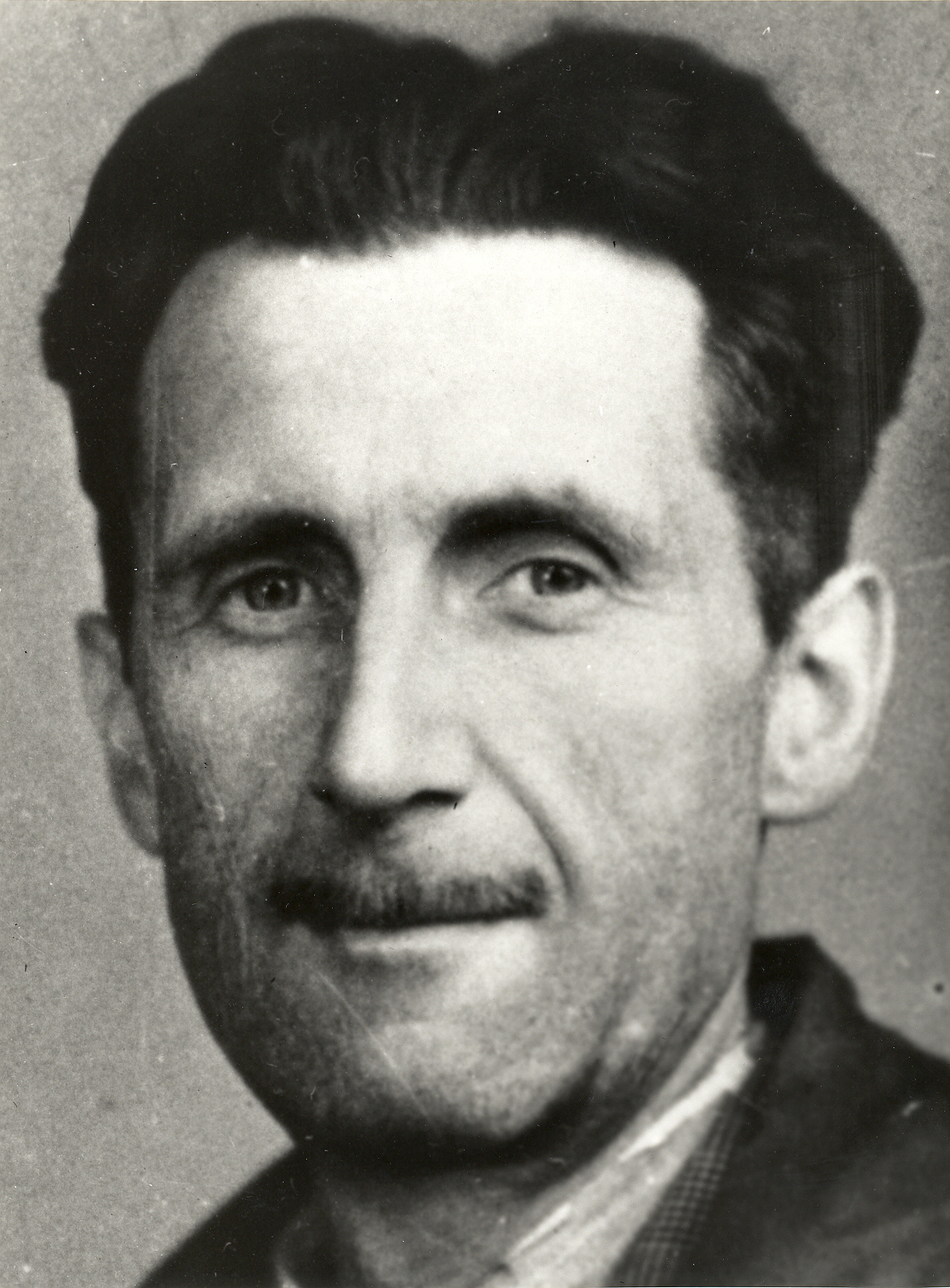
George Orwell, author of 1984

George Orwell, journalist and author of “1984”

Big Tech is not the Ministry of Truth.”
Or at least, so says the Attorney  General of Alabama  who has invited citizens to file formal complaints if they have been censored on social media.

“It should concern us all when platforms that hold such tremendous power and influence over information wield that power in contradiction of—and with undisguised disdain for—the foundational American principles of free speech and freedom of the press,” says Alabama Attorney General Steve Marshall. “The censorship campaign currently being waged by giant corporate oligarchs like Facebook and Twitter is, in a word, un-American.”

You may recall that in Orwell’s novel 1984, the Ministry of Truth controls news, entertainment, education, and the arts. Of course, truth is only what the ministry says it is.   Speaking up for some idea that is not “true”  is punishable by death or indefinite  imprisonment.

But it’s just a novel.  It may go without saying, but here in the US at least, nobody’s life is on the line and nobody is headed for Siberia for some crackpot  Q-nut idea they want to shout to the world.

Yes, Facebook and Twitter have blocked or even banned a few US citizens who insist on deadly lies, for example, that the last election was fraudulent;  that vaccines don’t work; that the virus  is a hoax; that masks are the “mark of the beast;” and so on.  Facebook and Twitter are trying to apply a standard of human dignity and provable truth through their terms of service.

Don’t like it?  Fine. Go to the competition.  There are dozens of new social media platforms, according to a July 2021 article in Forbes.  You don’t even have to pay for a subscription. Jeez.

Continue reading

A Right to be Forgotten


By Bill Kovarik 
(“How a silent movie informs the current debate over the right to be forgotten.”  CC license. The Conversation

In 1915, Gabrielle Darley killed a New Orleans man who had tricked her into a life of prostitution. She was tried, acquitted of murder and within a few years was living a new life under her married name, Melvin. Then a blockbuster movie, “The Red Kimono,” splashed her sensational story across America’s silver screens.

The 1925 film used Darley’s real name and details of her life taken from transcripts of the murder trial. She sued for invasion of privacy and won.

In deciding in favor of Darley, a California court said that people have a right to rehabilitation. “We should permit [people] to continue in the path of rectitude rather than throw [them] back into a life of shame or crime,” the court said. It is a sentiment that is harder to put into practice today, when information is much more readily available. Nonetheless, policymakers and media outlets are looking at the issue.

As a scholar of media history and law, I see Darley’s story as more than an interesting slice of legal and cinematic history. Her case provides an early example of how private people struggle to escape their pasts and how the idea of privacy is linked to rehabilitation.

Continue reading

That time private US media companies stepped in to silence the falsehoods and incitements of a major public figure … in 1938

By Bill Kovarik
Published in The Conversation, Jan. 15, 2021
Creative Commons license for non-profit republication.

In speeches filled with hatred and falsehoods, a public figure attacks his enemies and calls for marches on Washington. Then, after one particularly virulent address, private media companies close down his channels of communication, prompting consternation from his supporters and calls for a code of conduct to filter out violent rhetoric.

Sound familiar? Well, this was 1938, and the individual in question was Father Charles E. Coughlin, a Nazi-sympathizing Catholic priest with unfettered access to America’s vast radio audiences. The firms silencing him were the broadcasters of the day.

As a media historian, I find more than a little similarity between the stand those stations took back then and the way Twitter, YouTube and Facebook have silenced false claims of election fraud and incitements to violence in the aftermath of the siege on the U.S. Capitol – noticeably by silencing the claims of Donald Trump and his supporters.

A radio ministry

Coughlin’s Detroit ministry had grown up with radio, and, as his sermons grew more political, he began calling President Franklin D. Roosevelt a liar, a betrayer and a double-crosser. His fierce rhetoric fueled rallies and letter-writing campaigns for a dozen right-wing causes, from banking policy to opposing Russian communism. At the height of his popularity, an estimated 30 million Americans listened to his Sunday sermons.

Continue reading