Category Archives: Uncategorized

Freedom to deceive

400.SoothingSyrup

Mrs Winslow’s syrup contained alcohol and morphine and was sold from the 1840s to the 1930s. Today, advertising it as safe for children would be considered fraud.

Do corporations have a First Amendment right to deceive the public? Is it legal to knowingly lie about products or their public health or environmental impacts?

These days the question comes up in the context of the climate change debate, but the fight over corporate and commercial speech has a long and storied history.

Until about a century ago, advertising was unregulated, and advertisers were perfectly free to lie without taking responsibility for their products. “Soothing syrups” of opium and morphine were good for children, they said; radioactive drinks like “Radithor” healed like having the sun on the inside, they said;  and Grape-Nuts cereal would cure appendicitis without medical help, they said.

This sort of fraud is an abuse of the marketplace of ideas, and it was ended with a Progressive-era campaign to regulate advertising.

And yet, by the 21st century, international corporations were insisting on a First Amendment right to champion  junk food, to market tobacco, to fabricate information about sweat shop working conditions in developing nations, and to use outright nonsense to challenge legitimate science on fossil-fuel induced climate change.
Continue reading

Questioning the legacy of Citizens United

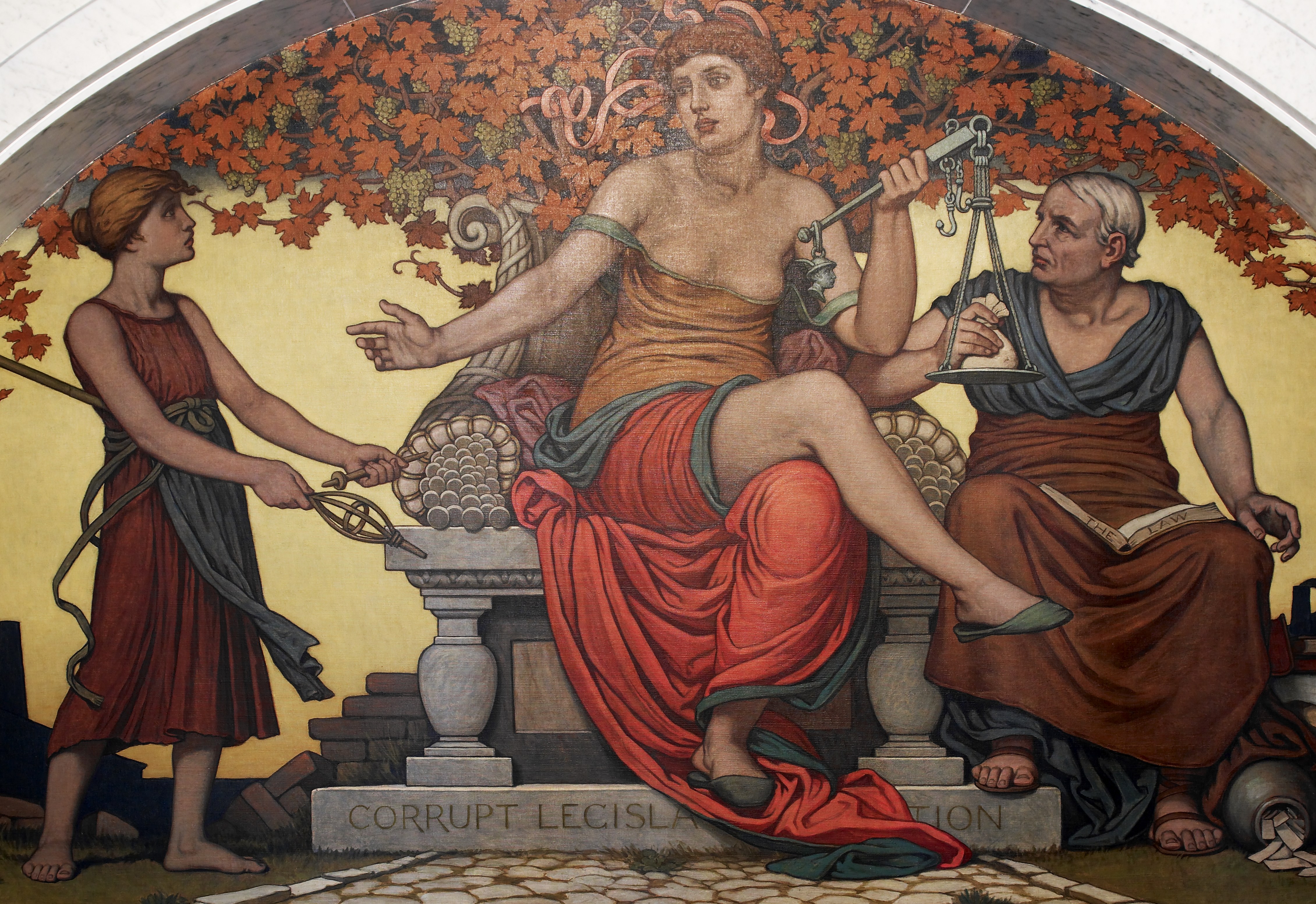
Political corruption illustrated; 1896 mural at the Library of Congress, Washington D.C.

It’s a cliche that  politicians are corrupt, taking money in exchange for bending the law to favor their donors. But is the act of donating money to a politician a form of free speech? Can it — should it — be regulated?

The influx of cash into political races has always been controversial, and attempts to regulate it have always been difficult.  The 2oo2 Bipartisan Campaign Reform Act (McCain – Feingold bill) was an attempt to limit the influx of cash in federal elections.

But that bill was overturned in the 2010  Citizens United v Federal Election Commission case which, in a very narrow 5-4 decision, said that money equals free speech. According to Brendan FischerContinue reading

Free speech for everyone

J.K. Rowling, author of the Harry Potter series, defends freedom of speech — even offensive speech — May 16, 2016 at the PEN America Literary Gala, where she received the 2016 PEN/Allen Foundation Literary Service Award. (Photo/Video: PEN America).

The idea that even offensive speech must be protected is an important theme in the history and philosophy of communications law worldwide.  John Stuart Mill said in On Liberty:

… the peculiar evil of silencing the expression of an opinion isthat it is robbing the human race; posterity as well as the existing generation; those who dissent from the opinion, still more than those who hold it. If the opinion is right, they are deprived of the opportunity of exchanging error for truth: if wrong, they lose, what is almost as great a benefit, the clearer perception and livelier impression of truth, produced by its collision with error.

We also find this very frequently in opinions of the Supreme Court on First Continue reading

Protecting Sources

WHY JOURNALISTS HAVE A DUTY TO PROTECT SOURCES

By Bill Kovarik — 07/06/05

A federal court sent New York Times reporter Judith Miller to jail today. She refused to reveal her source for a leak about the Valerie Plame affair.

“If journalists cannot be trusted to guarantee confidentiality, then journalists cannot function and there cannot be a free press,” she told the court a few minutes before they led her away.

The federal prosecutor, Patrick A. Fitzgerald, said Miller was placing herself above the law and threatened criminal as well as civil contempt charges.

The absurdity of the situation — after all, Miller did not publish the information she supposedly received — is beside the point. And the Bush administration has no doubt forgotten by now just how much flak Miller took for them in the run-up to the Iraq war. Critics of the war wish that she, in particular, had been less guillible. Its a mark of just how alienated Bush is from the press that his administration can no longer distinguish friends from enemies.

Continue reading