
Lawsuits over publication of private facts involve alleged violations of the personal right of privacy. There are four elements to a PPF lawsuit:
1. Public Disclosure: Facts are published, broadcast, or disseminated in some way.
2. Private Fact: The facts disclosed must be private and not generally known. It usually can’t involve facts that have already been made public.
3. Offensive to a Reasonable Person: The facts must be offensive to a reasonable person of ordinary sensibilities. Just a photo of a person slipping on a banana peel on a sidewalk might be a little embarrassing, but it is not enough. Disclosure of a loathsome disease, if true, would probably be offensive. Publication of facts concerning a private person’s financial records, medical information or domestic difficulties may be embarrassing enough to cause damages.
4. Not Newsworthy: The facts disclosed must not be newsworthy or involve matters of public interest.
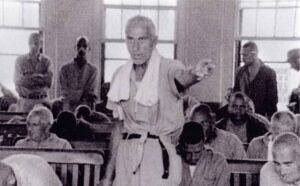
Titicut Follies, a 1967 documentary film about an abusive hospital for the criminally insane, was banned from the public until 1992 on the grounds that it was an invasion of the inmate’s privacy.
However, it was released after the families of seven inmates who had died at the hospital sued the hospital and state. One of the inmates was “restrained for 2½ months and given six psychiatric drugs at vastly unsafe levels (and) choked to death because he could not swallow his food,” his attorney said. “There is a direct connection between the decision not to show that film publicly and my client dying 20 years later, and a whole host of other people dying in between.”

Hulk Hogan (Terry Bollea)
** Bollea v. Gawker, 2016 — When Gawker magazine posted sex videos of Hulk Hogan (Terry Gene Bollea) with a friend’s wife, Bollea filed suit in a Florida state court for invasion of privacy (intrusion, publication of private facts and misappropriation) along with intentional infliction of emotional distress. To win, Bollea had to show that this was truthful information, that a reasonable person would find it highly offensive, and that it did not involve a legitimate public concern. (See The Law Behind the Hulk Hogan verdict. Also see the New York Times story. and a more recent Talking Points Memo article about Gawker as the “Case of the Century.”
A jury found the release of the videos highly offensive, and even though Bollea is a public figure, awarded him $140 million in March, 2016. A month later, when two appeals were denied, Gawker magazine went into bankruptcy. The magazine did not have the money for appeals. And it seemed clear that Gawker had crossed a line; courts in previous cases involving sex tapes and stars like Pamela Anderson and Natalee Holloway ruled that writing about such tapes was not an invasion of privacy, but showing the tapes was an invasion of privacy. In retrospect, the case had a chilling effect on the press, even with cases that were more in service to the public interest and less to the prurient interest .

Gabrielle Darley, aka Melvin
Melvin v. Reid, 1931— A movie called the “Red Kimona,” written and produced by Dorothy Davenport Reid, came out in 1925. It presented what it said was the true story of a former prostitute Gabrielle Darley who was charged with murder in New Orleans and found innocent. In 1918, Darley married a high society figure from St. Louis, Mr. Bernard Melvin and she abandoned her old life. When the Red Kimona movie came out in 1925, Mrs. Melvin (Darley) sued for $50,000 and won in California court.
The movie producers argued that all the facts of the case were true and open in court records. The court said: “Any person living a life of rectitude has that right to happiness which includes a freedom from unnecessary attacks on his character, social standing, or reputation.”
Today, this case would have been decided rather differently. Information in open court records is privileged, as noted in Cox v Cohn and Smith v Daily Mail cases. However, the idea that private people deserve a chance to be rehabilitated is part of the debate over the “right to be forgotten.”

William J. Sidis
Sidis v. F.R. Publishing,1940 — A celebrated mathematical genius and Harvard grad at age 16, William Sidis disappeared from public view but was profiled in a New Yorker magazine wrote an article under the headline: “Where Are They Now? April Fool!”
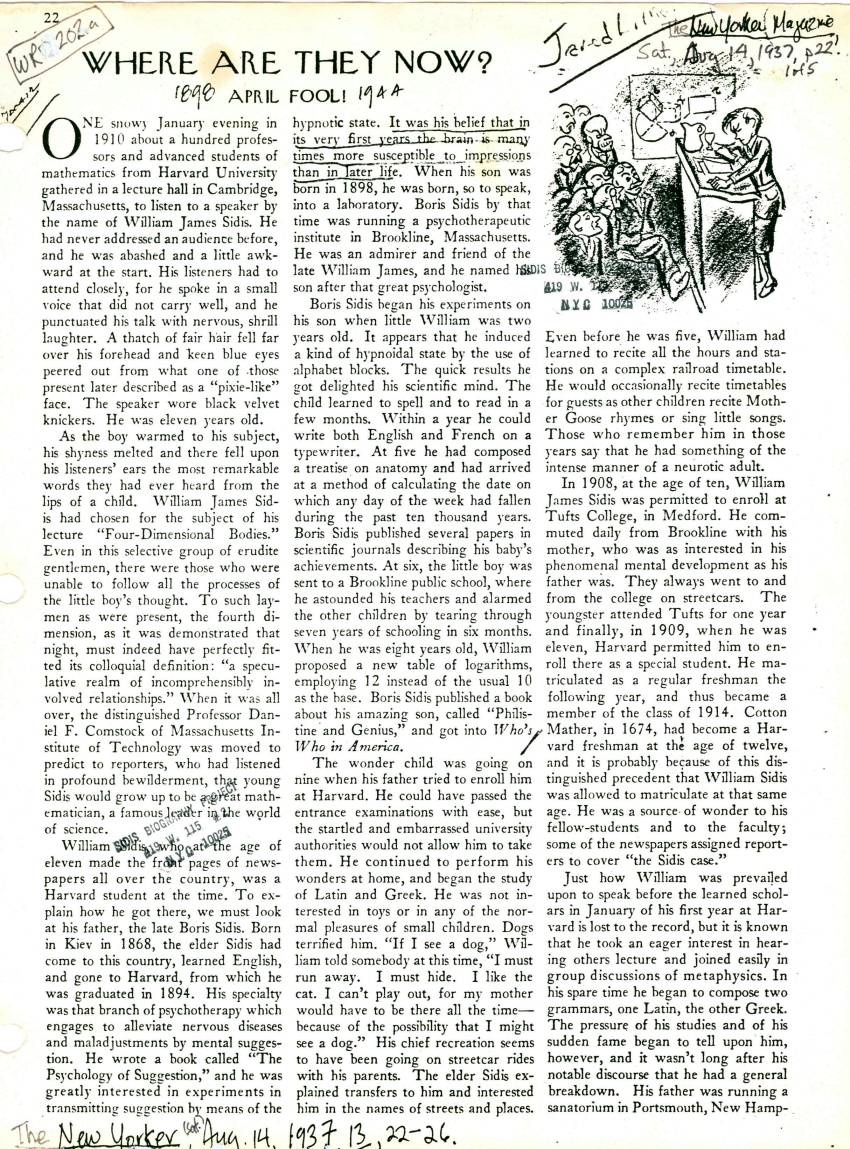
Sidis sued for invasion of privacy but lost. NY federal appeals court said someone who had become a celebrity even involuntarily could not avoid all publicity later on. The key question was newsworthiness or public interest. “Regrettably or not, the misfortunes and frailties of neighbors and public figures are subjects of considerable interest and discussion to the rest of the population.”
** Cox. v. Cohn, 1975, The identification of a sexual assault victim by a Georgia broadcaster from information lawfully obtained from public records wasn’t invasion of privacy, the courts said. (However, identifying sexual assault victims in the media, without consent, is usually a serious breech of ethics). Florida Star v B.J.F. (1989) is a similar case where truthful, lawfully obtained information was not considered to be invasive.
*Smith v. Daily Mail, 1979. A school shooting in Charleston, W.Va. in 1978 led to the arrest of a 14 year old boy. Under state law, juvenile suspects cannot be named in newspaper accounts. While it is permissible for a state to keep information about juvenile subjects secret, the court said, but if the media obtain the information lawfully, they should be able to publish without fear of prosecution. According to the ACLU brief:
“The question for decision is not whether the public’s interest in knowing the name of a juvenile defendant outweighs the harm which may result from revealing it. There are many situations and this may well be one in which the prudent newspaper editor would conclude that it is better not to publish. But the First Amendment does not protect only the prudent. Rather, it guarantees that in all but the most compelling circumstances each editor has the right to decide whether particular information in his possession should be published, at least where the information is lawfully acquired. The information at issue here was neither obscene nor untruthful. It concerned a matter of public importance. It was not secret. It was acquired by lawful means. It is precisely the sort of information to which First Amendment values most clearly attach.”
* Howard v. Des Moines Register, 1979 — Robbin Woody Howard was identified as a victim of forced sterilization in county mental facility in an article about the tragic legacy of coercive eugenics in the US. She sued for invasion of privacy, but the Iowa state supreme court said the news article was a good example of investigative journalism and was the subject of public interest. This is an example of the leeway courts allow legitimate news articles.
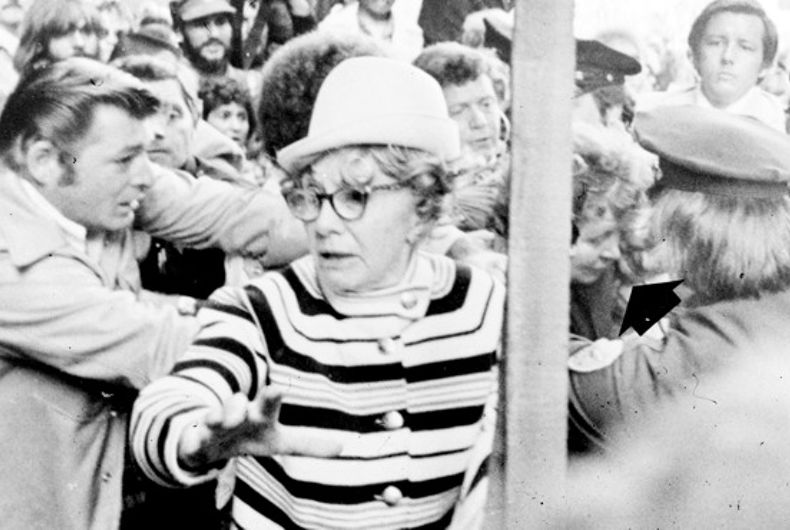 **Sipple v. Chronicle Publishing, 1984. A bystander named Oliver Sipple prevented the assassination of then-president Gerald Ford outside a San Francisco hotel in 1975. Shortly afterwards, Sipple’s past as a gay activist became part of the story of his heroism. He sued the San Francisco Chronicle for revealing details of his private life, but lost because he had become a public figure and questions about his character were deemed newsworthy. The court said: “There can be no privacy with respect to a matter which is already public or which has previously become part of the ‘public domain.’ Once the information is released, unlike a physical object, it cannot be recaptured and sealed.” A 2021 RadioLab podcast about the case describes the way Sipple “paid dearly” for his heroism.
MORE INFORMATION
See Reporter’s Committee for Freedom of the Press briefing on PPF