
|
Freedom, human rights, and social responsibilities — These are the great ideals that are central to state, national, and international systems of laws governing and protecting the aspirations of all humanity. And they are the themes of this course in communications law and ethics. Here we begin a fascinating and challenging journey to examine what is, in effect, the world’s greatest experiment — which we trust (as Thomas Jefferson once said) “will end in establishing the fact that man may be governed by reason and truth.” At this moment in human history, few would claim that the fact is established or that the experiment has been successful. As it turns out, being governed by reason and truth is not easy in practice. This brings us to the need for wide understanding of communications law. How do we grasp the structures and principles of law that balance competing views and interests? How do we protect individual freedom of religion, speech and press while, at the same time, ensuring a socially responsible structure that sustains these systems? The quality of life in modern civilization depends on the way we answer these question. Therefore we need an informed understanding of the professional, practical, and social issues that rise from our attempts to balance rights and responsibilities in communications law. |
|
 Recognition of the inherent dignity, and of the equal and inalienable rights of all members of the human family, is the foundation of freedom, justice and peace in the world …
  We hold these truths to be self-evident, that all men are created equal, that they are endowed by their Creator with certain unalienable Rights, that among these are Life, Liberty and the pursuit of Happiness.–That to secure these rights, Governments are instituted among Men, deriving their just powers from the consent of the governed.
  That all men are by nature equally free and independent and have certain inherent rights, of which, when they enter into a state of society, they cannot, by any compact, deprive or divest their posterity; namely, the enjoyment of life and liberty, with the means of acquiring and possessing property, and pursuing and obtaining happiness and safety … That all power is vested in, and consequently derived from, the people, that magistrates are their trustees and servants, and at all times amenable to them…
 1.1.2 How WE STUDY MEDIA LAW
Understanding civics, law, and human rights, is a responsibility of American citizenship.
As Americans, you have inherited a republic. It is your job to keep it.
Just as the law protects your rights, you are expected to stand up for freedom of religion, speech and press and to stand against tyranny, censorship and intolerance, at home and worldwide.
How we stand up for freedom, and how we reconcile our disagreements while acknowledging our doubts — as well as our debts to those who came before us — is the reason we study constitutional law.
Respectful scholarship
Democracy requires tolerance, and by the same token, universities are firmly based on respectful approaches to scholarship. This implies a positive attitude toward diversity of views and a tolerance of rational differences honestly expressed.
However, respectful scholarship does not mean that we have to quietly tolerate hate speech or put up with intolerance of democracy itself. (This is a problem addressed by Karl Popper’s Paradox of Tolerance).
1.1.3 Critical thinking
The foundation for any study of law and legal systems is critical thinking. This involves careful judgement in evaluating facts, evidence, observations and arguments.
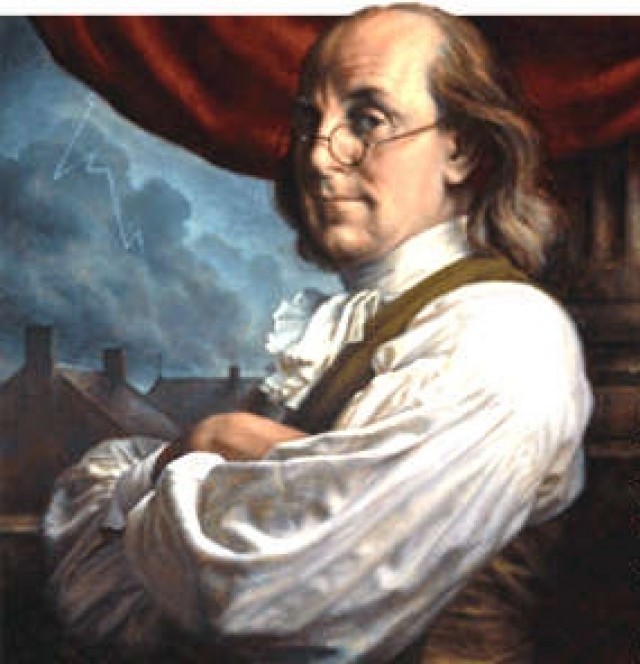
Benjamin Franklin
You will want to understand some of the basic elements of critical thinking, such as:
1. A lack of infallibility — We all need a dash of humility in the way we judge other people and their opinions. In a democracy, no one can win every argument and every election. As Benjamin Franklin said in 1787, urging adoption of US Constitution : “… I cannot help expressing a Wish, that every Member of the Convention, who may still have Objections to it, would with me on this Occasion doubt a little of his own Infallibility, and to make manifest our Unanimity, put his Name to this instrument.”
2. Deductive reasoning – This is reasoning from a general rule (such as a Supreme Court decision) to a specific conclusion (such as how the rule should be applied in a particular case). In a common law system (such as the US, the UK and the Commonwealth Nations, among others) a court’s legal precedent is part of the law. The precedent-setting or “controlling” higher court cases are those that set the rules for similar cases in the lower courts.
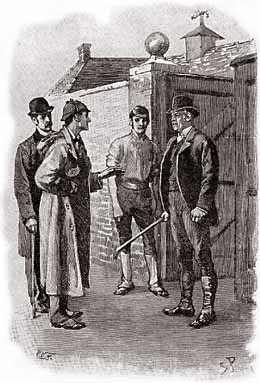 Example — Sherlock Holmes uses deductive reasoning to solve his cases. Readers may remember the case of Silver Blaze, in which a dog did not bark when a crime took place. Holmes was able to deduce that since the dog did not bark, it probably knew the person who was committing the crime. This narrowed the field of suspects.
Reasoning by analogy. This is similar to deductive thinking, and just means that similar facts or principles or court decisions can help form a general rule that is likely to lead to similar conclusions. This is important when law students write briefs and cite cases to support a legal argument.
Example — When a civil lawsuit for defamation is filed in any US court, the facts of that case are compared with standards set in the New York Times v. Sullivan case (1964). These Sullivan standards include a high bar for public figures who would like to sue their critics and the court’s acknowledgement of “a profound national commitment to the principle that debate on public issues should be uninhibited, robust, and wide-open.”
3. Inductive reasoning – From specific to general — Lawyers and judges often use inductive reasoning when they analyze a set of specific cases to develop a general legal rule. The idea is to gather facts and then apply them in formulating a theory.
Example: If lower courts reach differing decisions concerning similar cases, a higher court may need to consider the specific facts and the various philosophies of law (jurisprudence) and then create a new general rule.
4. Awareness of logical fallacies — Most students are exposed to logical fallacies in basic courses. Among these fallacies are: ad hominem attack, slippery slope, hasty generalization, straw man, smoke screen, post hoc ergo propter hoc, bandwagon, transfer, false dilemma , begging the question, testimonial, name calling, false authority, appeal to ignorance (in both the skeptic’s form and the true believer’s form), poisoning the well, non-sequitur, loaded language, plain folk, appeal to the people, appeal to fear, appeal to guilt, guilt by association.
Another is the inductive fallacy, in which specific observations may be used to justify a theory that doesn’t take all facts into account.
Example: If one sees only black crows, one may suspect that all crows are black. (In fact, there are albino crows).
5. Jurisprudence — Theory and philosophy of law — In a democracy, theories of law and justice are subjects of constant debate. For example, do we favor the original intent of the framers of the constitution or are we more concerned with adapting the constitution to modern circumstances and changing social morays? In communications law, how do we balance the individual’s right of privacy against the social value of freedom of speech and press?
Legal epistemology is a branch of jurisprudence in which we ask how we understand and evaluate the sources and reliability of the information we use. The question ranges from basic legal research methods to questions of who and what is included (or not included) in the way we understand justice.
FURTHER
- Wikipedia article on Critical Thinking
- The Paul-Elder critical thinking framework
- Critical thinking in the law by Courtney Lee and Tim Naccarato, University of the Pacific, provides a helpful perspective on an engaged study of law.
- A song for the First Amendment
- Teaching the First Amendment — MTSU
- First Amendment Timeline from the Annenberg Center
- First Amendment news from the Freedom Forum
- Legal epistemology, Oxford Bibliographies